
Big data in Telecom: User churn prediction
Preserving customer loyalty through predictive analytics and real-time churn prevention, engineered with Modsen AI-augmented delivery model.
4x
lower churn rate
+16%
customer satisfaction
+31%
faster with AI-driven delivery
IT-service type
Custom software development + IT staff augmentation
Business vertical
Telecom
Tech stack
Python, Django, Cassandra, Hadoop, Apache Kafka, TensorFlow, Docker, Kubernetes, Grafana
Partner
A regional mobile network operator serving Eastern and Central Europe for 10+ years.
Partner’s challenges
In the previous fiscal year, the operator lost over 5% of its subscriber base to competitors without a clear operational explanation. The business needed to move from reactive retention to predictive churn prevention, based on real behavior and service signals:
- Detect churn risk early from usage, billing, and support interactions
- Understand why customers are likely to leave
- Trigger personalized retention campaigns in time
- Enable real-time monitoring and alerts for churn spikes
Solutions proposed by Modsen
Unified data layer aggregating usage, billing, service history, and customer interaction data
Machine learning-based churn scoring with risk categorization
Churn driver analysis to support explainable, next-best retention actions
Customer segmentation and personalized retention campaign targeting
Real-time churn analytics with automated alerts and trend monitoring
Native CRM integration enabling operational execution of retention workflows
Project team
1
Project manager
2
Business analyst
1
Data scientist
2
Data engineers
2
Software engineers
2
UI/UX designers
2
QA engineers

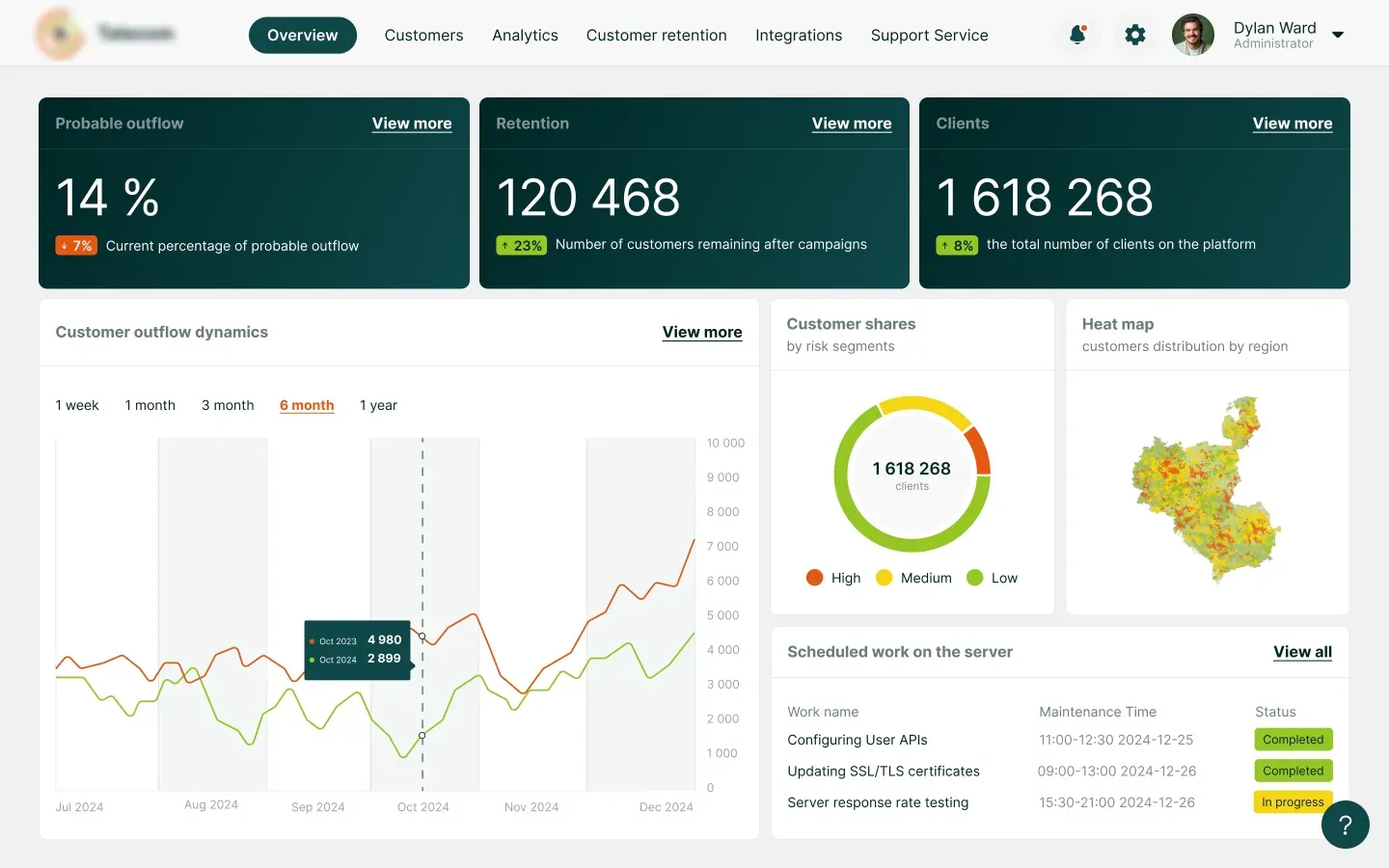
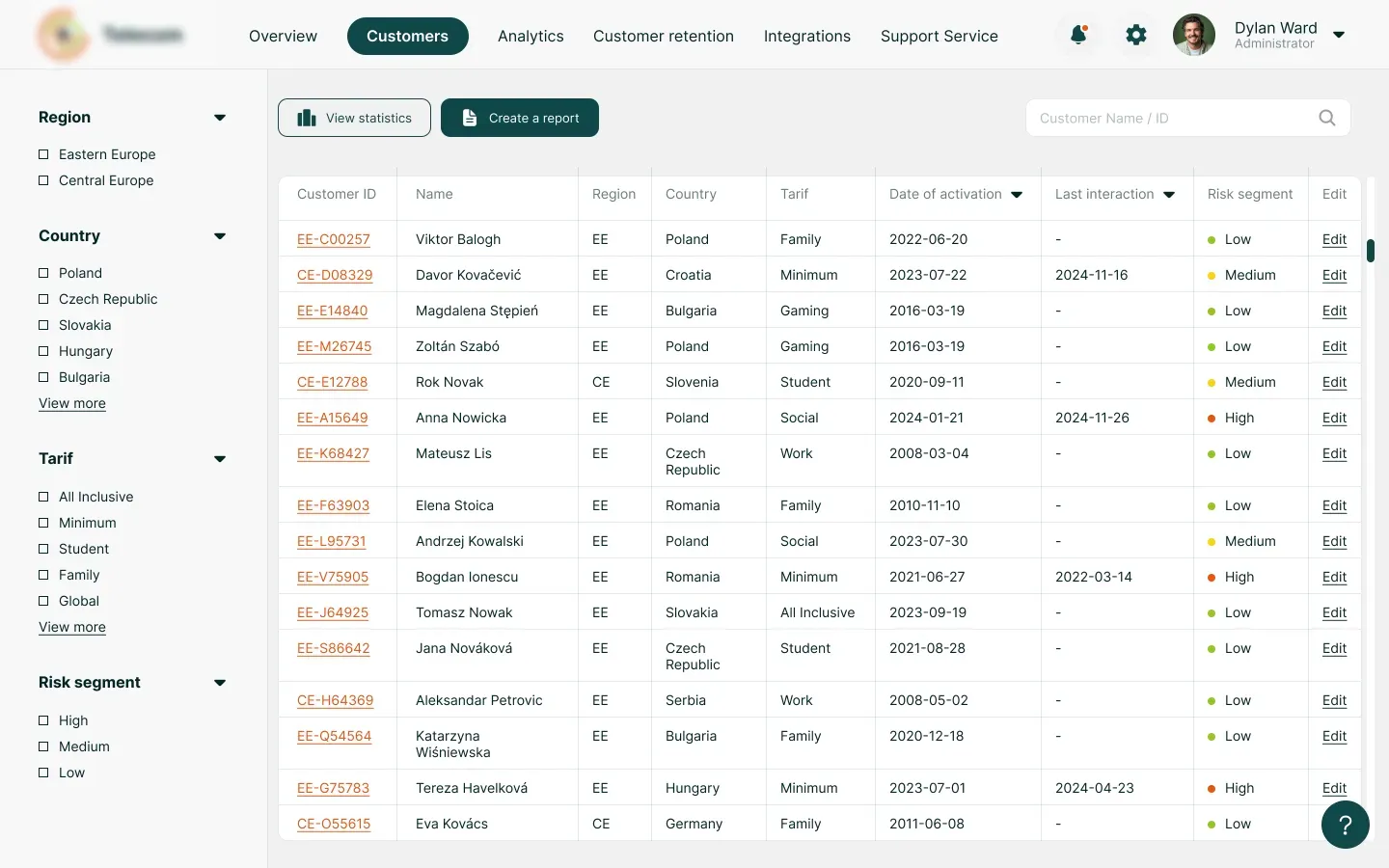
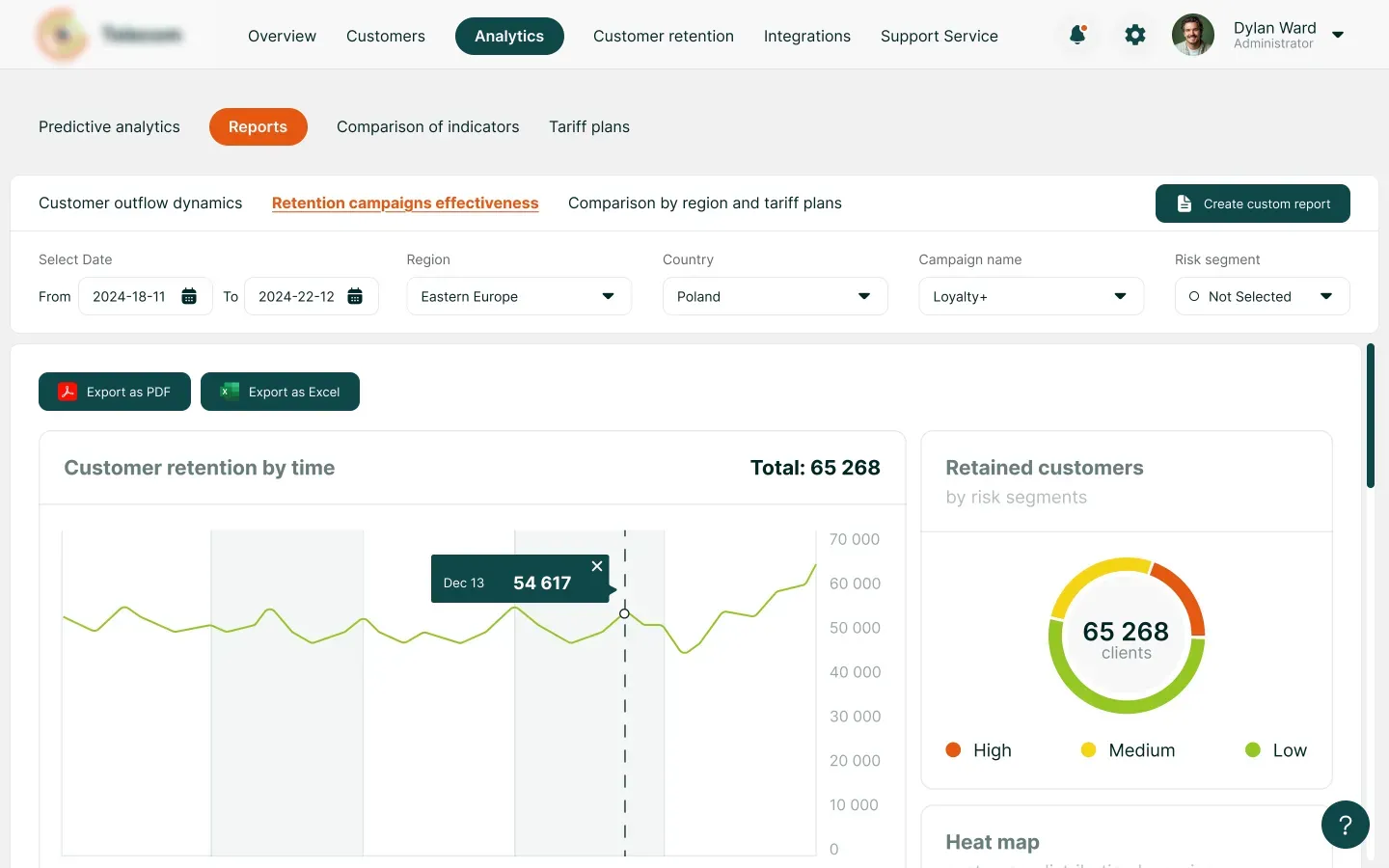
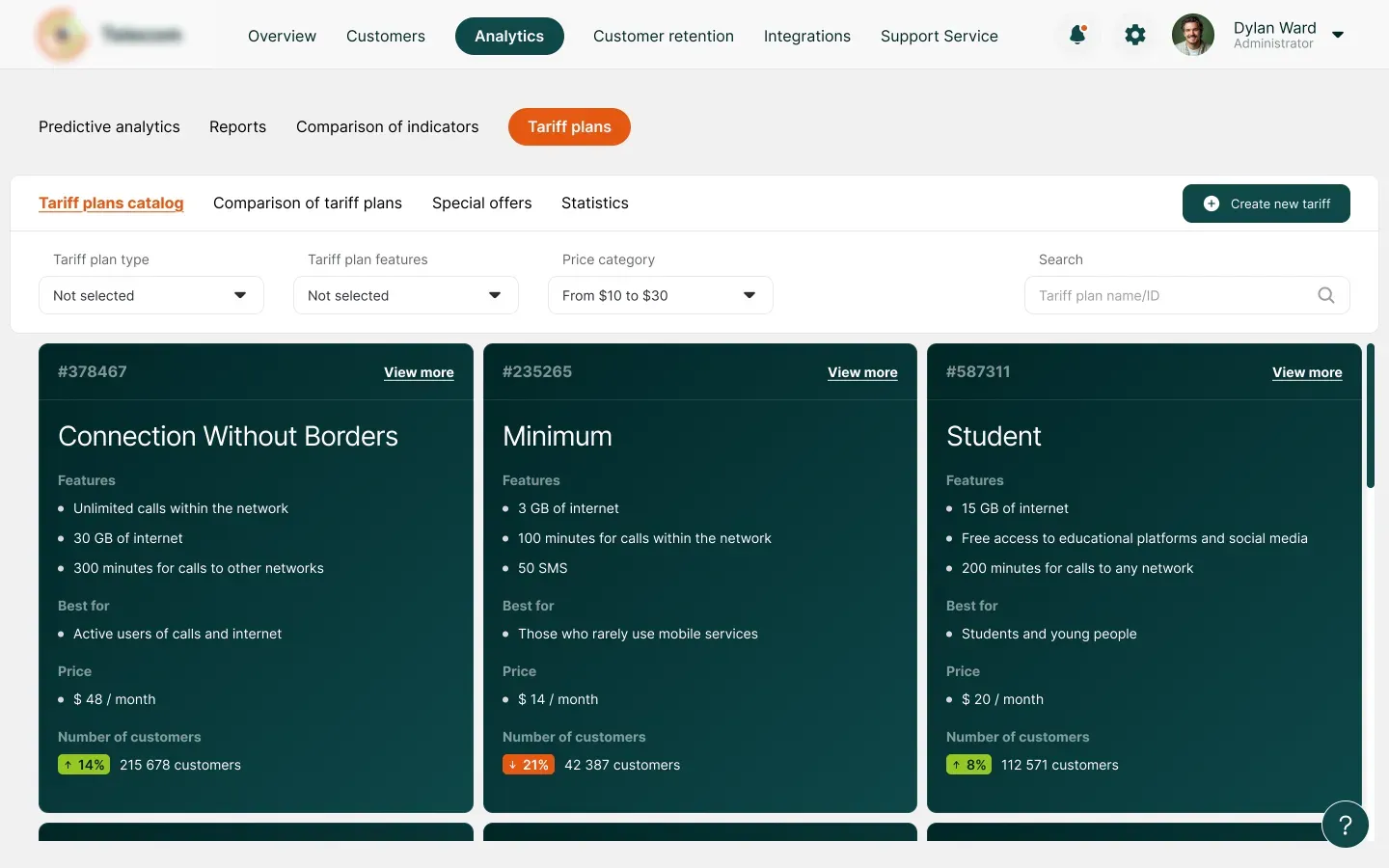
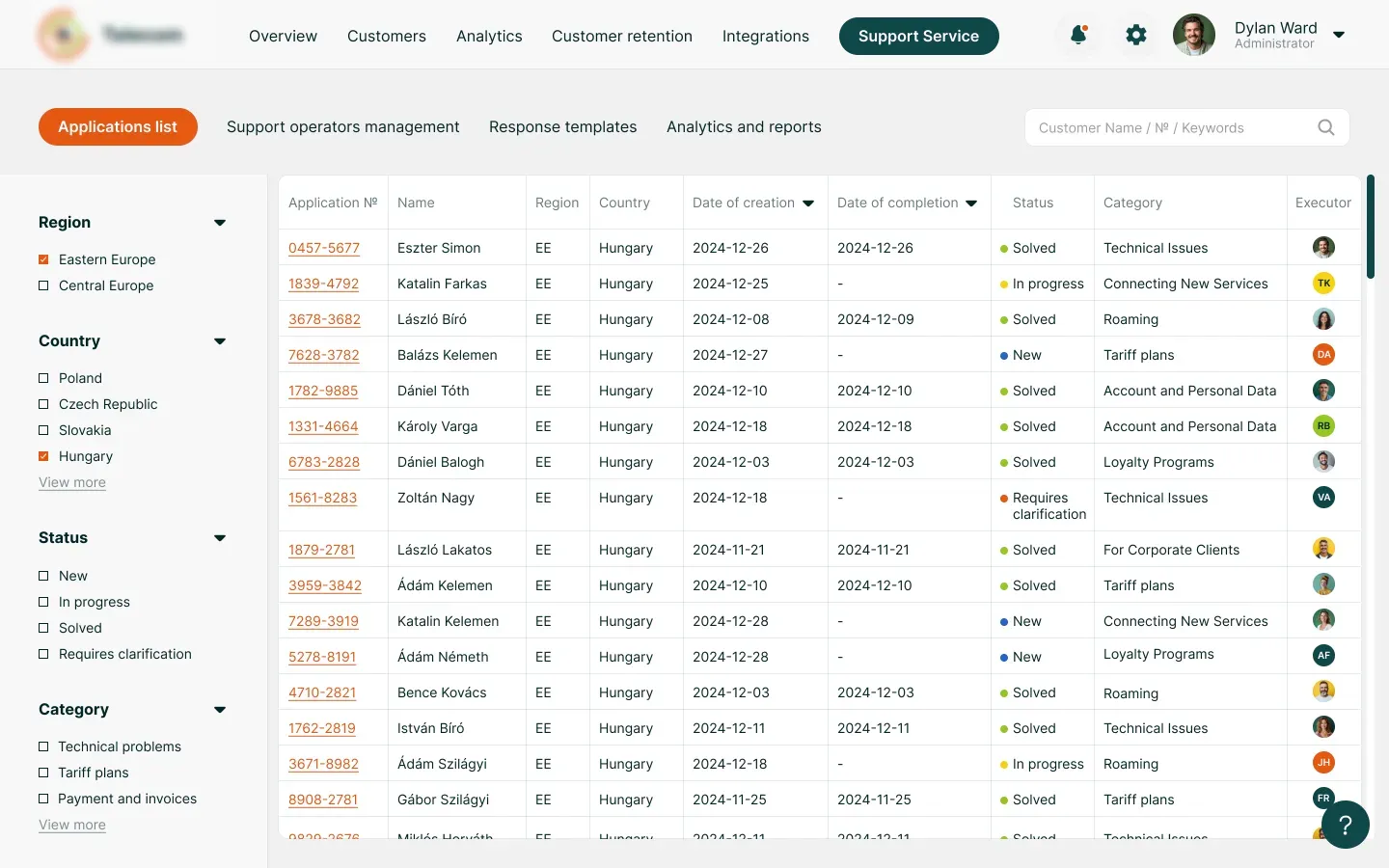
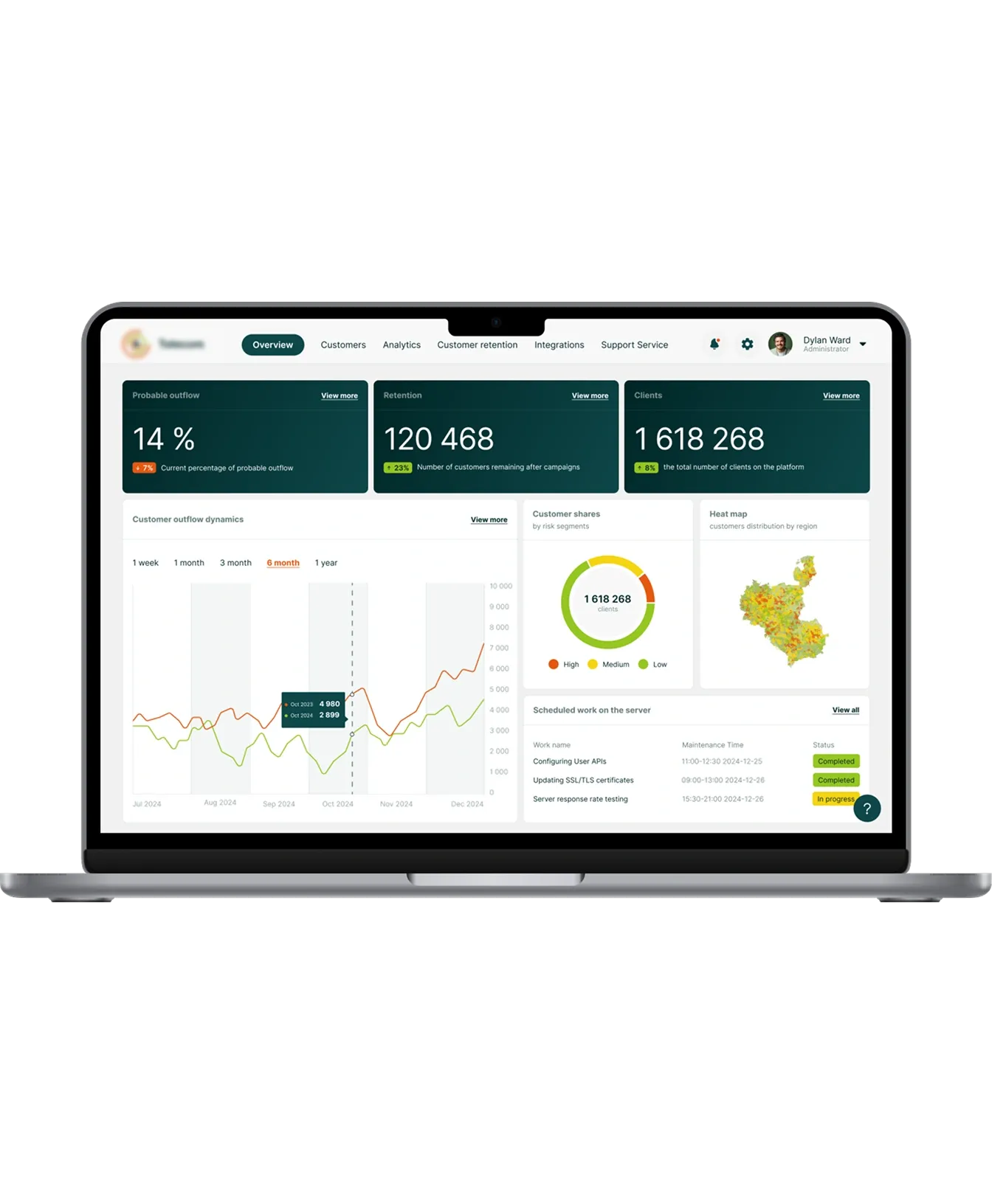
The data shown in this application interface during the case demonstration is not real customer data. All information presented is for demonstration purposes only.
Development process
Faster delivery, lower cost, fewer post-launch defects – that's what happens when AI takes over the repetitive analysis, development, and testing work under Modsen AI-augmented software delivery.
Analysis & Planning
We worked with customer service, marketing, and IT stakeholders to define ML objectives, training data requirements, CRM touchpoints, real-time dashboards, churn alerts, and KPI reporting. AI-assisted analysis helped structure large volumes of requirements and data-related information, while specialists validated the resulting business logic and delivery priorities.
UI/UX design
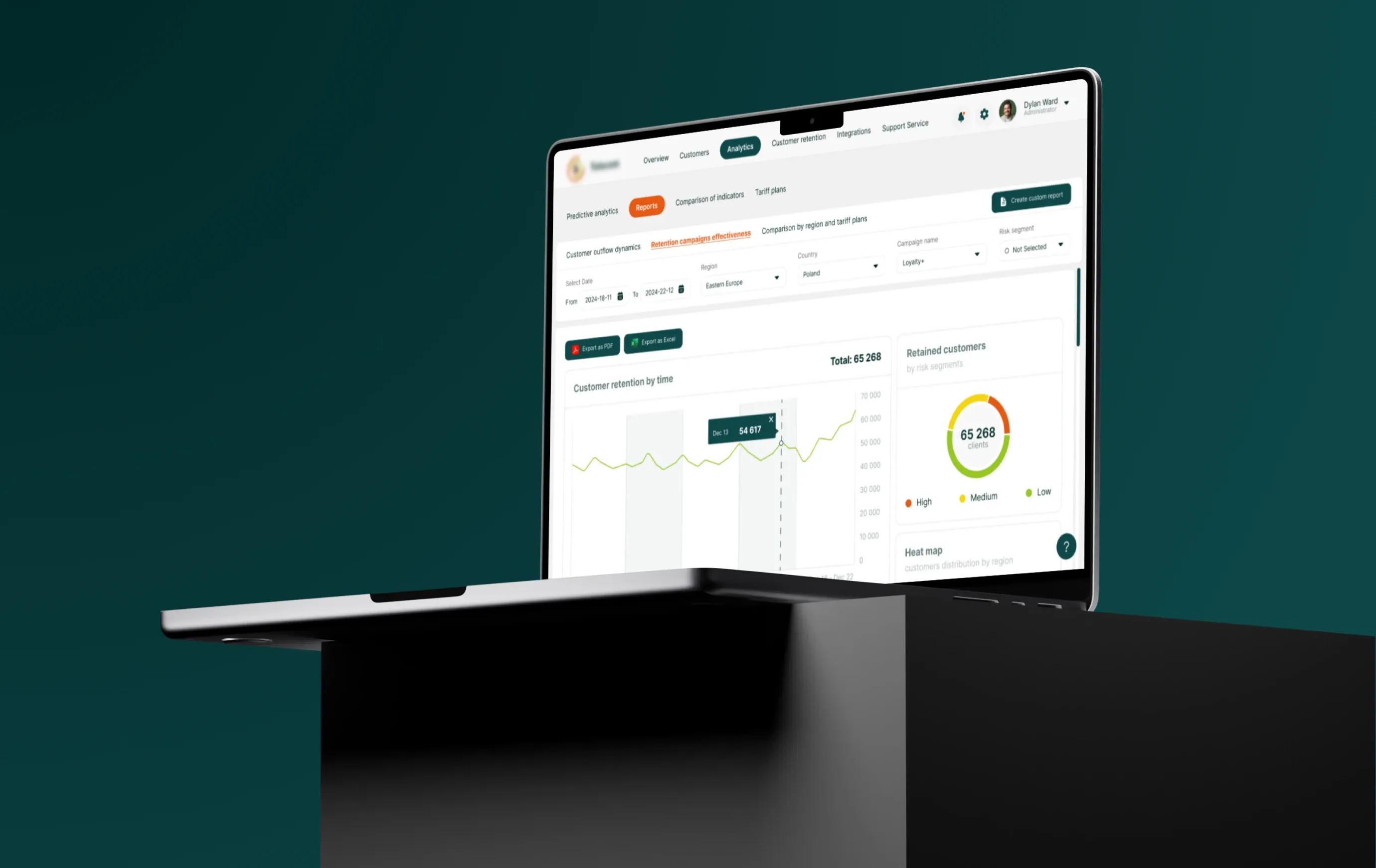
AI was used to support the early design phase by generating rough interface prototypes and helping quickly test alternative UX ideas. Modsen Design Studio created churn risk dashboards, campaign management views, and real-time reporting screens that made complex predictive insights easier to interpret and act on.
Development
The platform was built iteratively across three main areas:
Data integration: pipelines for diverse sources into a consolidated data environment.
Model training: churn scoring, risk classification, and churn driver analysis.
Feature delivery: dashboards, alerts, segmentation, and campaign enablement.
Less time spent on repetitive implementation, more model shipped – faster, cheaper, with fewer defects surviving to production.
Testing
AI-native QA practices were used to automate and continuously optimize repetitive testing activities, while QA engineers focused on validating critical business logic, edge cases, and end-to-end system behavior.
Client acceptance
End-to-end business scenarios were validated together with key stakeholders, churn prediction results were benchmarked against target KPIs, and the solution was formally approved for production rollout.
Maintenance
After go-live, the platform remained under continuous support, including performance monitoring, issue resolution, iterative improvements, and periodic reviews aligned with changing customer behavior and business needs.

Planning to leverage predictive analytics in telecom?
Book a free consultation with Modsen to discuss data readiness, ML use cases, and the expected impact on customer behavior insights, operational efficiency, and revenue growth.
Business value delivered
Lower churn in 6 months (4×)
Higher customer satisfaction (+16%)

Annual revenue growth (+31% YoY)
Stronger retention operations

Let's calculate the accurate cost and resources required for your project