
Market-ready demand‑forecast SaaS MVP for retail
From product hypothesis to a working SaaS platform tested by real retailers, delivered through Modsen AI-augmented development model.
weeks from kickoff to first customer pilot
core workflows validated with pilot retailers
of the MVP codebase carried into the full product build
IT-service type
Custom software development (MVP)
Business vertical
Retail/SaaS
Tech stack
Next.js, Node.js, PostgreSQL, Shopify and POS integrations, AWS, Docker
Partner
A Europe-based retail tech startup building a SaaS platform for small and independent retailers. The product uses historical sales, seasonality, and inventory data to forecast demand and recommend when and how much stock to reorder.
The startup was at the pre-seed stage and needed to validate the product with real retailers before committing to a full-scale platform and further investment.
Partner’s challenges
- No existing product, limited runway, and a need to get the first pilot customers using the platform quickly.
- Limited certainty about which forecasting and inventory workflows retailers would actually use on a daily basis.
- A need to integrate with Shopify and common POS systems to evaluate integration approaches.
- The product had to support multiple retailer accounts while keeping each customer's data isolated.
- A pre-seed budget required a tightly controlled scope with no unnecessary features.
Solutions proposed by Modsen
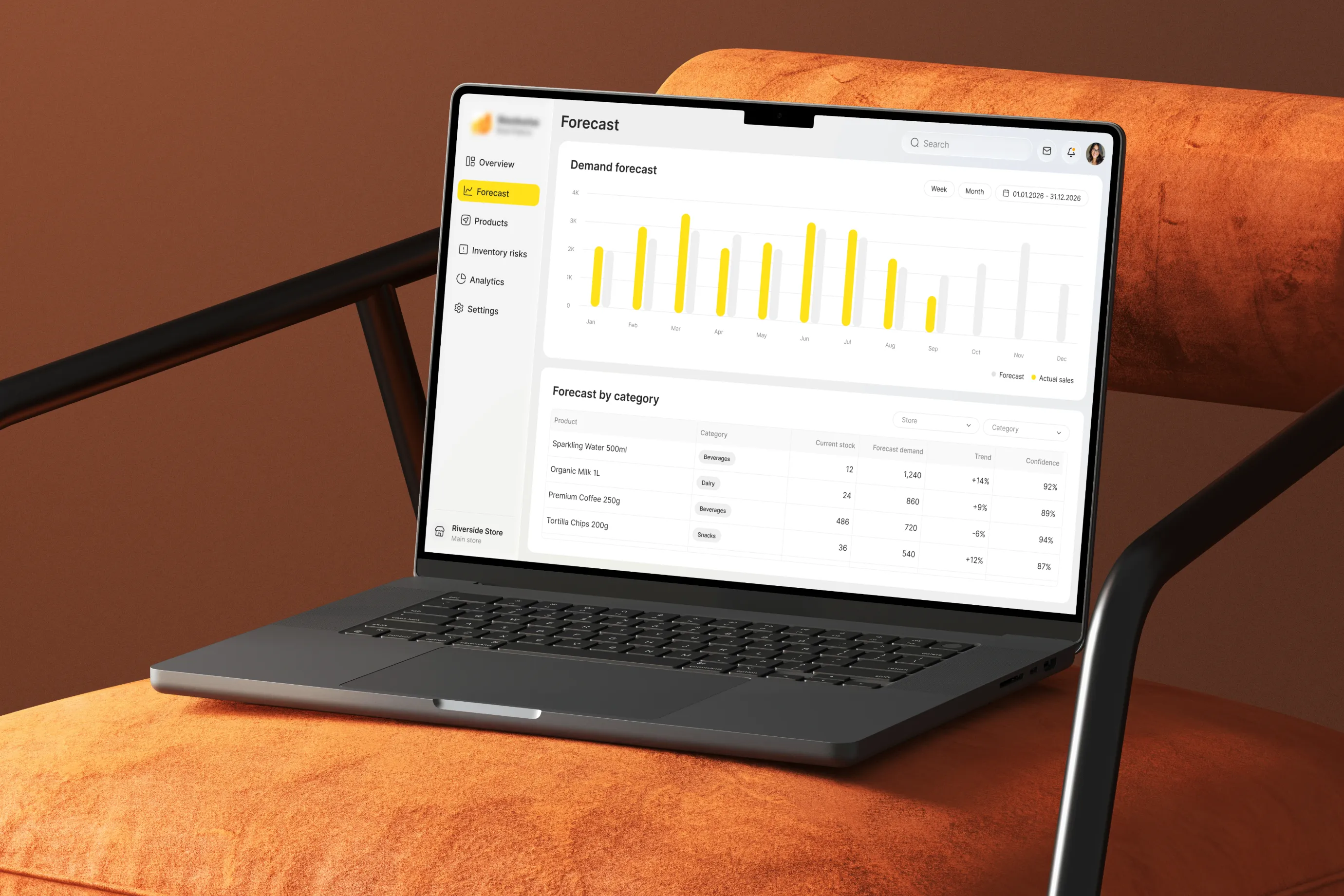
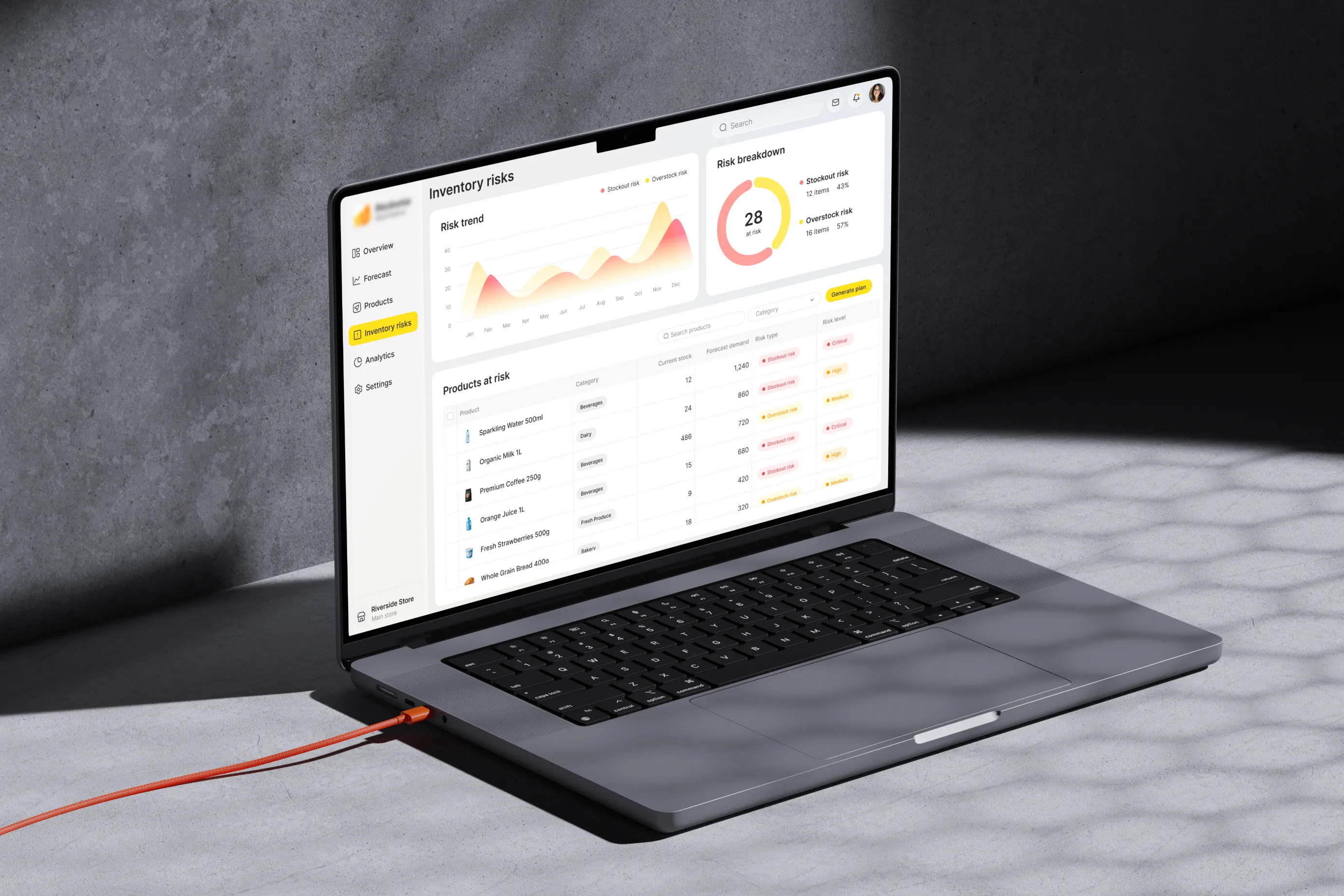
A focused SaaS MVP built around three core workflows
A lightweight admin panel for managing retailer accounts, users, integrations, and data sources
Multi-tenant architecture allowing multiple retailers to use the same platform while keeping their data isolated
An extensible architecture designed to support additional forecasting models, integrations, and subscription features after validation
Direct integrations with Shopify and common POS systems
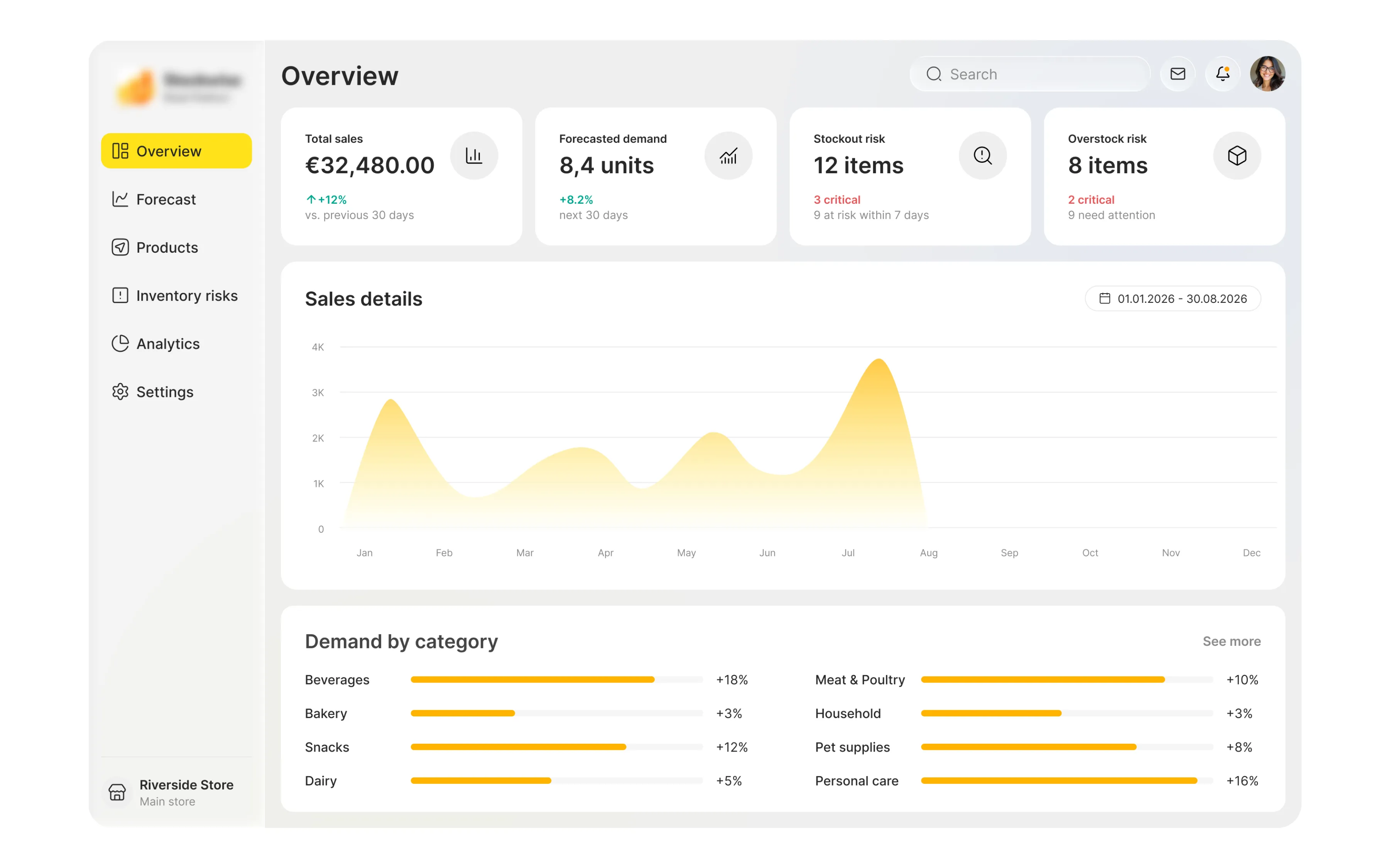
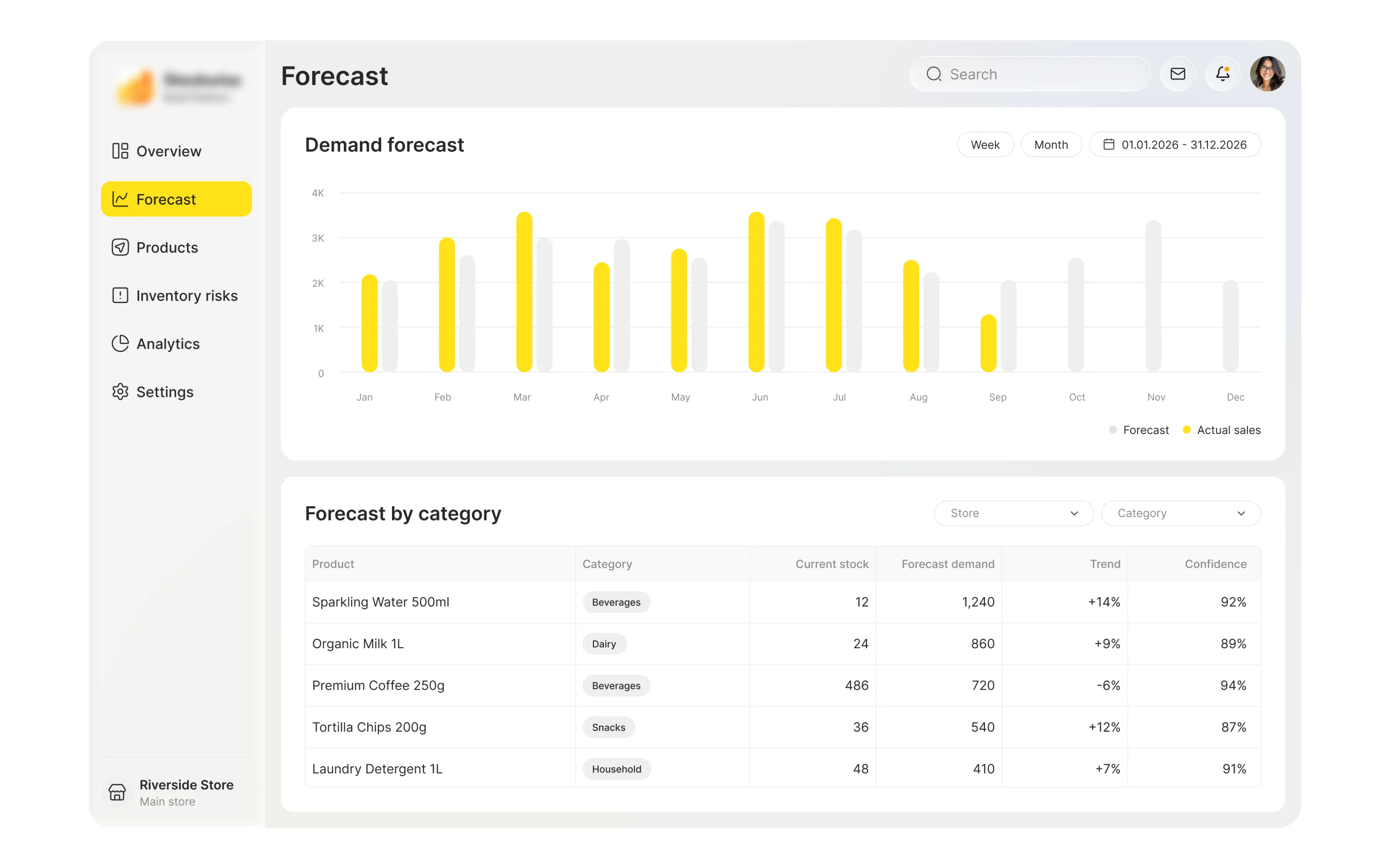
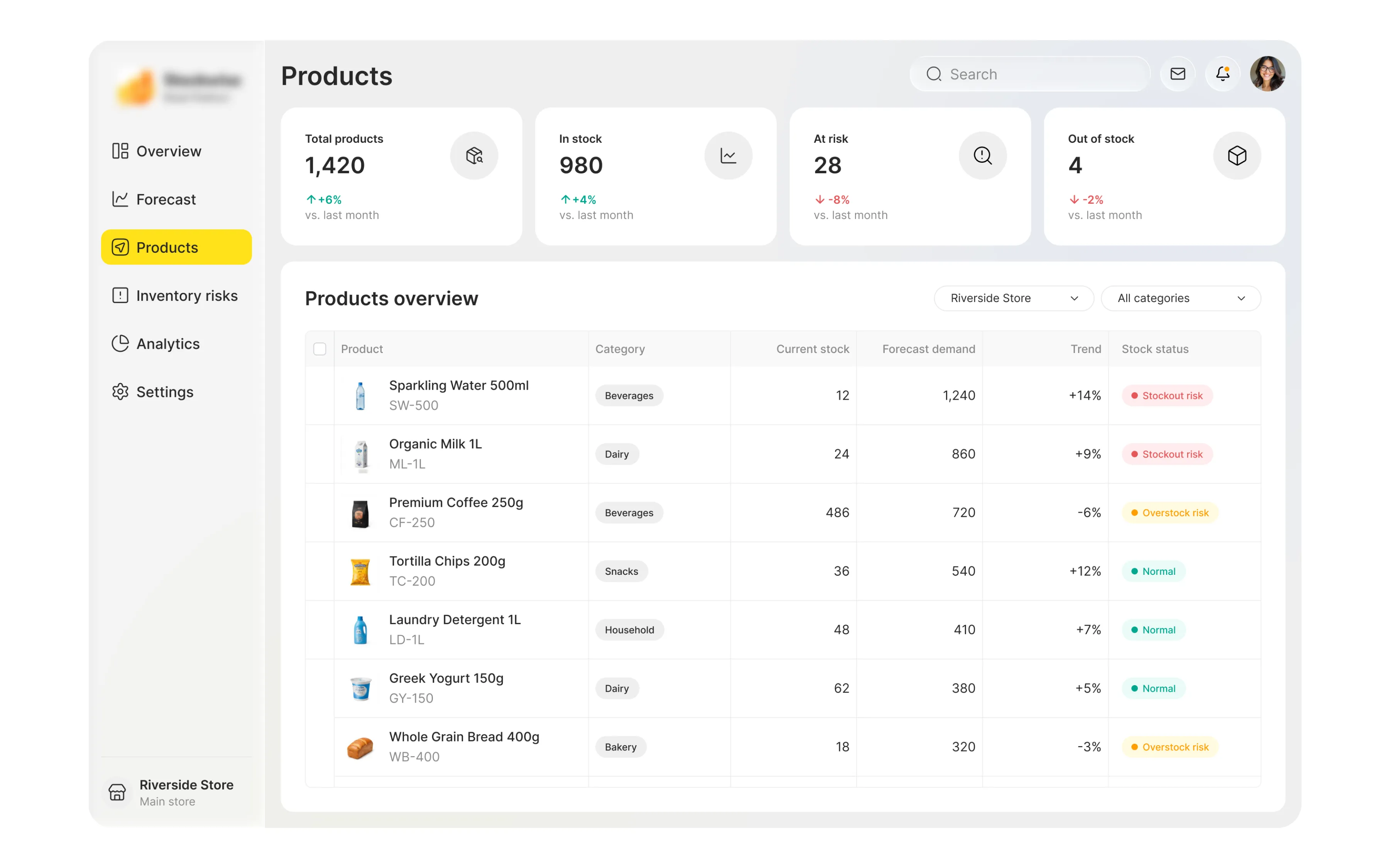
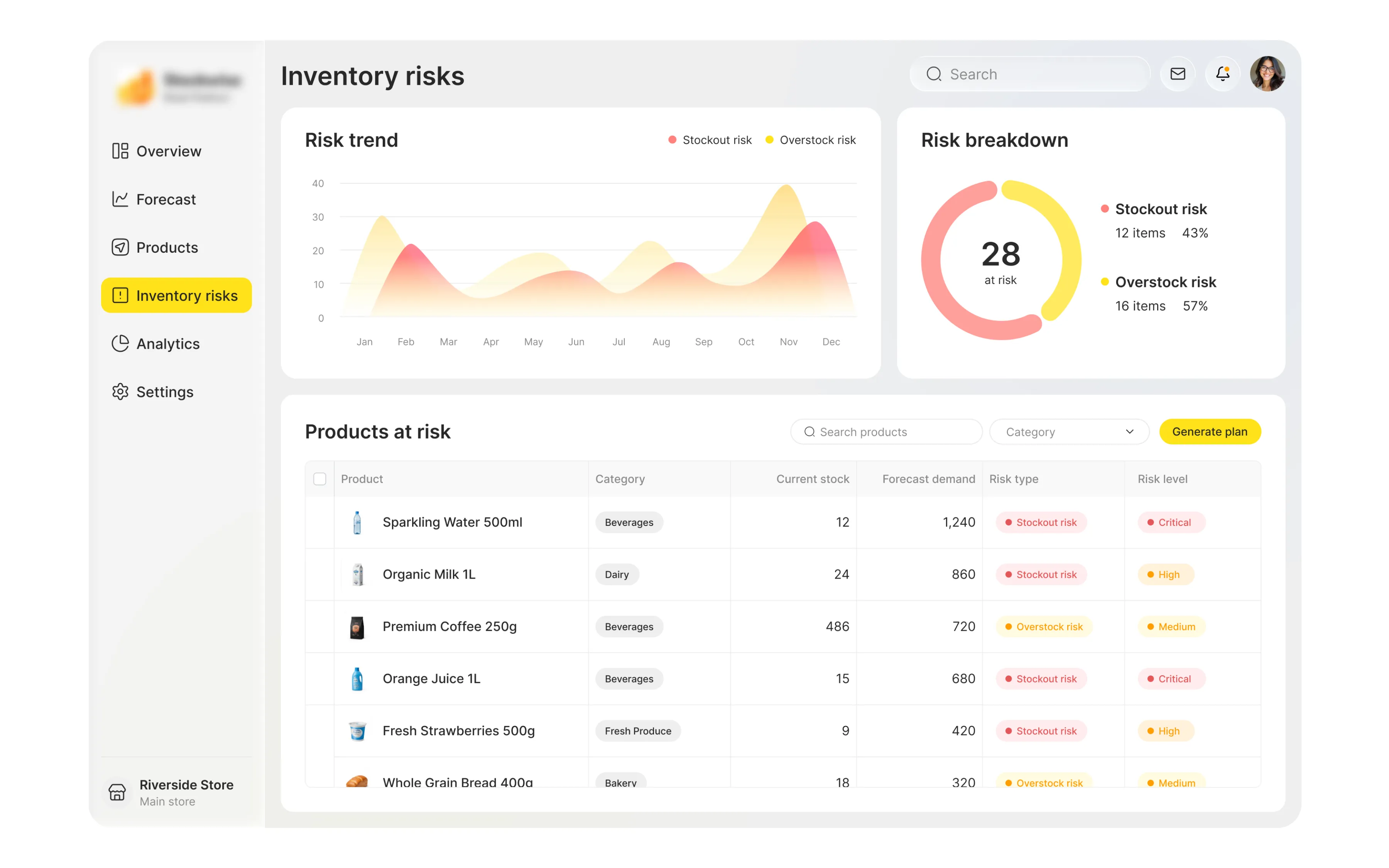
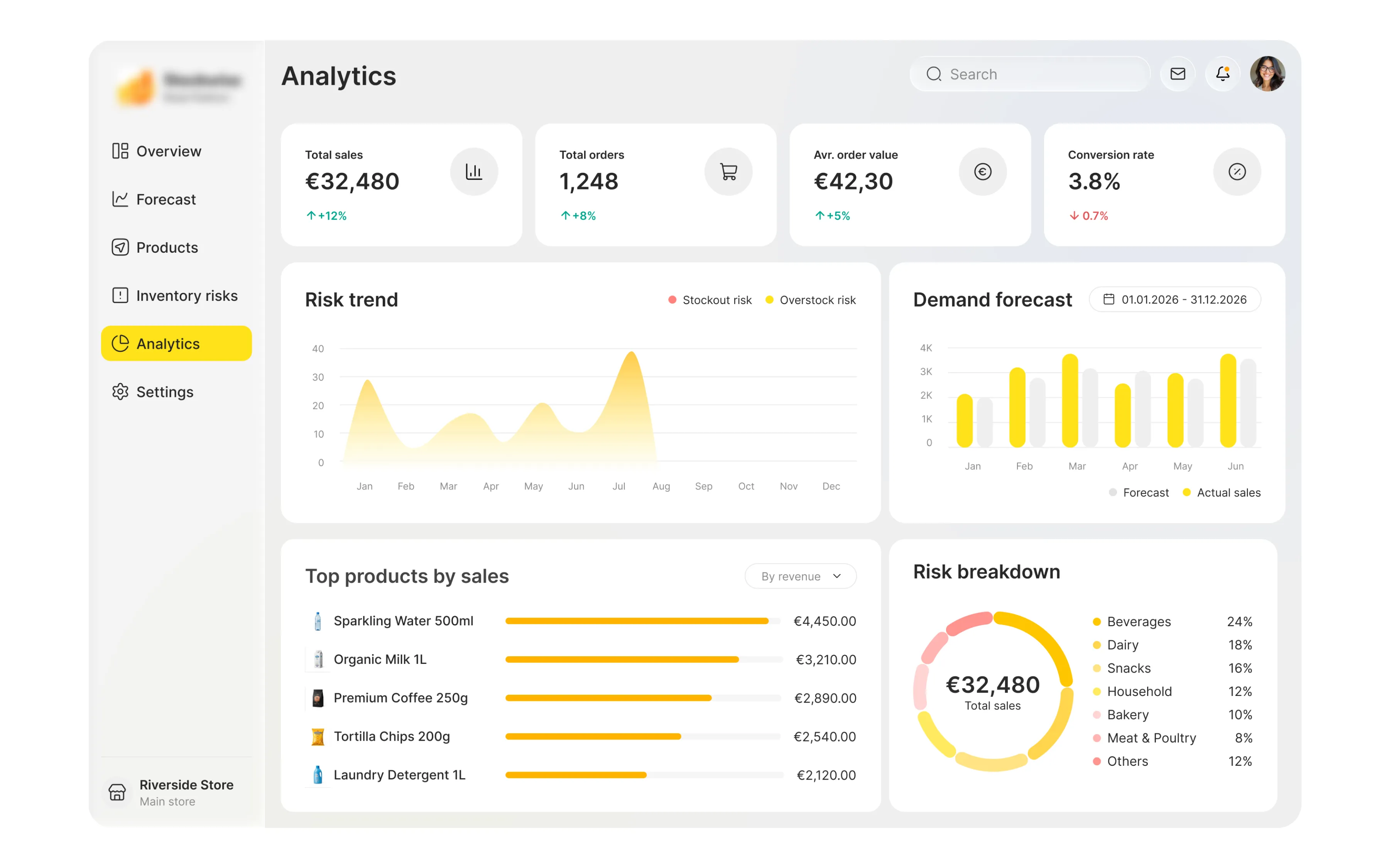
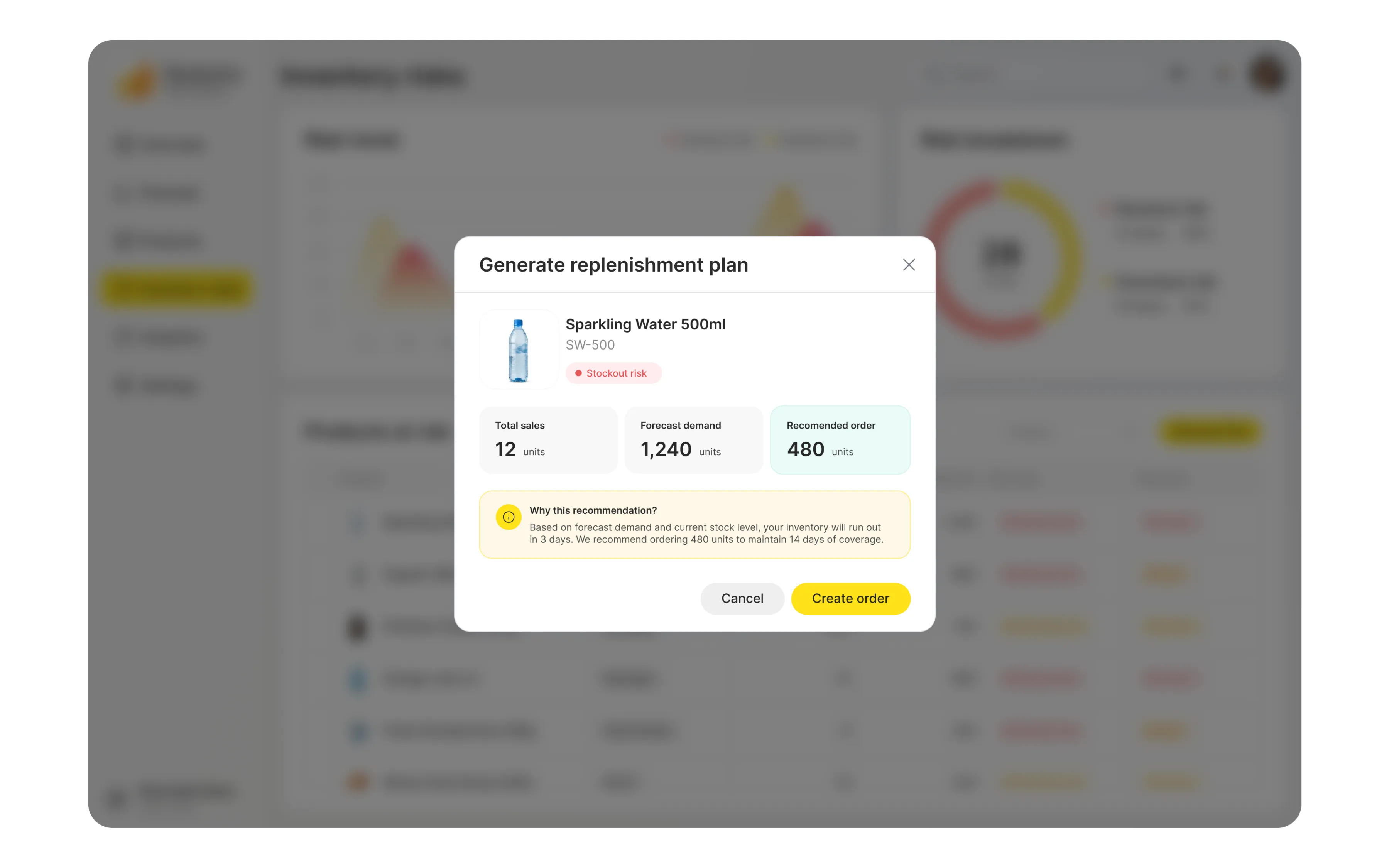
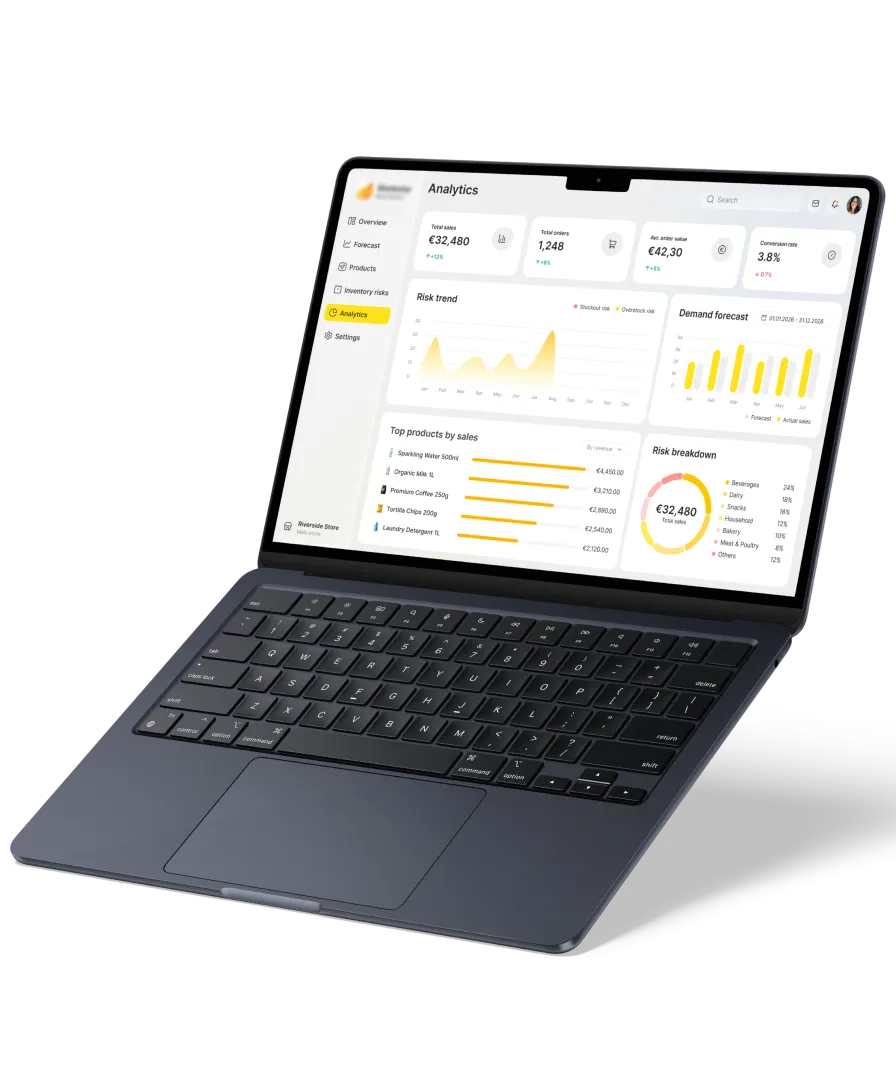
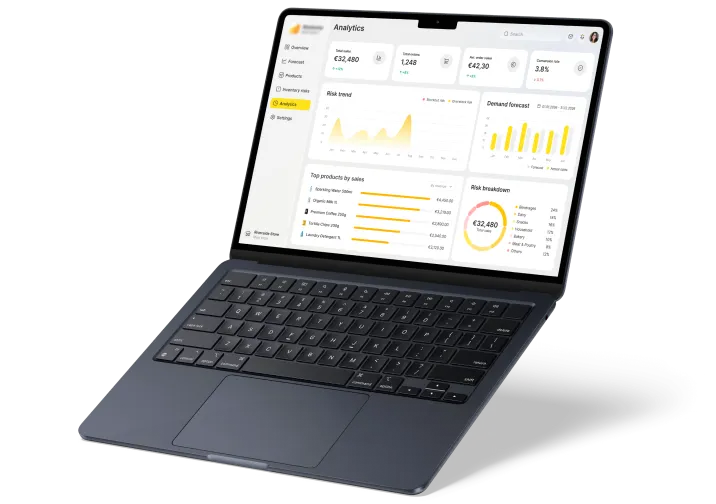
The data shown in this application interface during the case demonstration is not real customer data. All information presented is for demonstration purposes only.
Project team
1
PM (part-time)
2
Back-end engineers
1
Front-end engineer
1
QA engineer (part-time)
1
UI/UX designer

Validate your SaaS idea with a market-ready MVP
Development process
For a pre-seed startup, the objective was to prove that retailers would use the product and that its forecasting recommendations could become part of their regular inventory workflow.
Modsen AI-augmented delivery model accelerated routine development and testing tasks, helping reduce MVP delivery costs. This approach was especially well suited to the startup's MVP stage, enabling the team to launch faster without overinvesting in features that had not yet been validated.
Analysis and planning
The team started by translating the founder's product hypothesis into a narrow set of workflows that could be tested with real retailers.
Modsen mapped the required sales and inventory data, evaluated integration options, and defined the minimum data model needed to generate useful forecasts. AI-assisted analysis helped model data flows and identify edge cases early, keeping the MVP scope under control.
UI/UX design
Retailers need actionable information rather than complex dashboards. The team therefore designed the MVP around three questions: what is likely to sell, what is running low, and when should it be reordered? AI-generated layout variations accelerated early exploration, while the UX team refined the selected flows around real retailer scenarios and pilot feedback.
Development
The team built the SaaS foundation around a multi-tenant architecture, with separate retailer accounts, role-based access, and isolated customer data. Authentication, API scaffolding, integration components, and other predictable groundwork were accelerated with AI-generated code and then reviewed by senior engineers.
This allowed the team to spend more development time on the forecasting logic, data normalization, and Shopify/POS integrations that directly affected the MVP's ability to deliver useful recommendations.
Testing
Testing focused on the three core workflows and the integrations responsible for bringing sales and inventory data into the platform. AI-assisted test generation expanded coverage for APIs and common user scenarios, while QA engineers handled integration, regression, and exploratory testing.
Partner acceptance
The founder evaluated the MVP with real retail businesses and compared usage against the original product hypothesis. The pilot confirmed that retailers were willing to use automated demand forecasts and reorder recommendations as part of their inventory planning process. The findings were then used to prioritize the roadmap for the full product.
Maintenance
During the pilot, Modsen supported the startup with fixes, monitoring, and rapid adjustments based on retailer feedback. The team kept the MVP stable while the founder gathered usage data and refined the product direction.
Business value
A validated SaaS hypothesis
- The startup tested its core product assumption before investing in a full-scale platform
- 3 core workflows were validated as valuable parts of the retailer's day-to-day inventory process
- Pilot feedback provided a clear basis for prioritizing the next product release and future integrations
A foundation built for the full product
- The MVP was built on a multi-tenant architecture that could support multiple retailers
- 80% of the MVP codebase was carried into the full product build, reducing redevelopment costs and accelerating the next stage of development
Speed to market on a pre-seed budget
- 9 weeks was all it took for a compact team, using an AI-augmented delivery model, to ship a production-ready MVP
- The startup moved from product hypothesis to real customer pilots within its planned runway
Let's calculate the accurate cost and resources required for your project