
Full-cycle SaaS product development for logistics company
From first architecture decision to production launch, powered by Modsen AI-augmented delivery model.
68%
fewer manual shipment-status inquiries
14
weeks from kickoff to first paying customer
1.5x
faster AI-augmented process
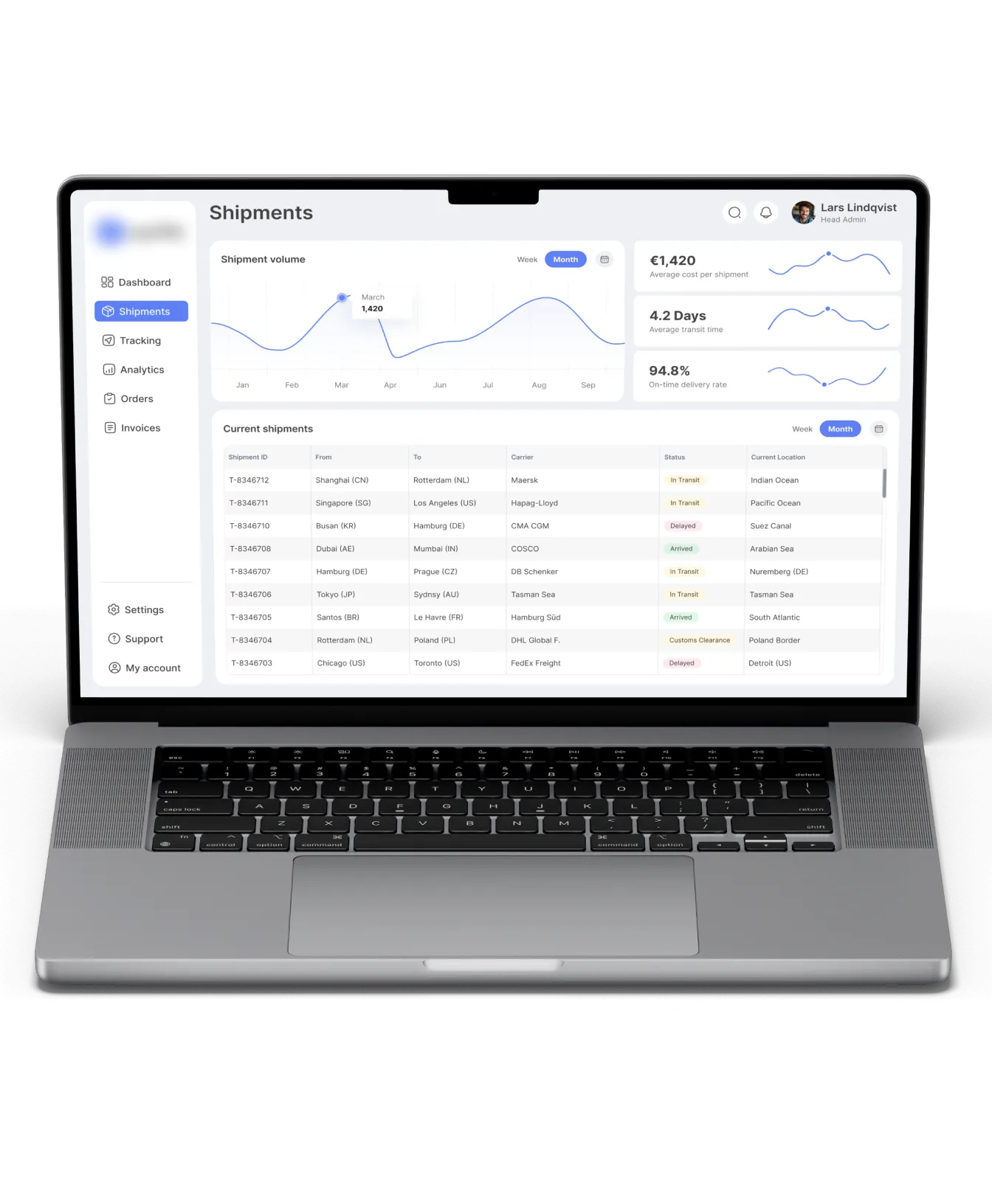
IT-service type
Custom software development
Business vertical
Logistics/SaaS
Tech stack
React, TypeScript, Node.js, PostgreSQL, Redis, AWS (ECS, RDS, S3), carrier and EDI/API integrations, Docker
Partner
The EU-based logistics technology company preparing to launch a new product line: a multi-carrier shipment-visibility SaaS platform giving shippers and 3PLs a single view of freight status across multiple carriers.
Partner’s challenges
- No existing codebase: the product had to be architected and built entirely from scratch, on a fixed go-to-market date.
- Carrier data arrives in inconsistent formats (EDI, carrier APIs, manual updates), requiring a normalization layer before any status could be shown reliably.
- Multi-tenant architecture requirements: strict data isolation between shippers sharing the same infrastructure.
- Uncertainty about which visibility features would matter most at launch versus which could follow in later releases.
- Need for a platform that could scale from a handful of pilot shippers to thousands of active shipments without a re-architecture.
Solutions proposed by Modsen
Carrier data normalization layer unifying EDI feeds, carrier APIs, and manual status updates
Role-based access for shippers, carriers, and internal operations teams
Multi-tenant architecture with per-shipper data isolation
Admin dashboard for account provisioning and carrier-integration monitoring
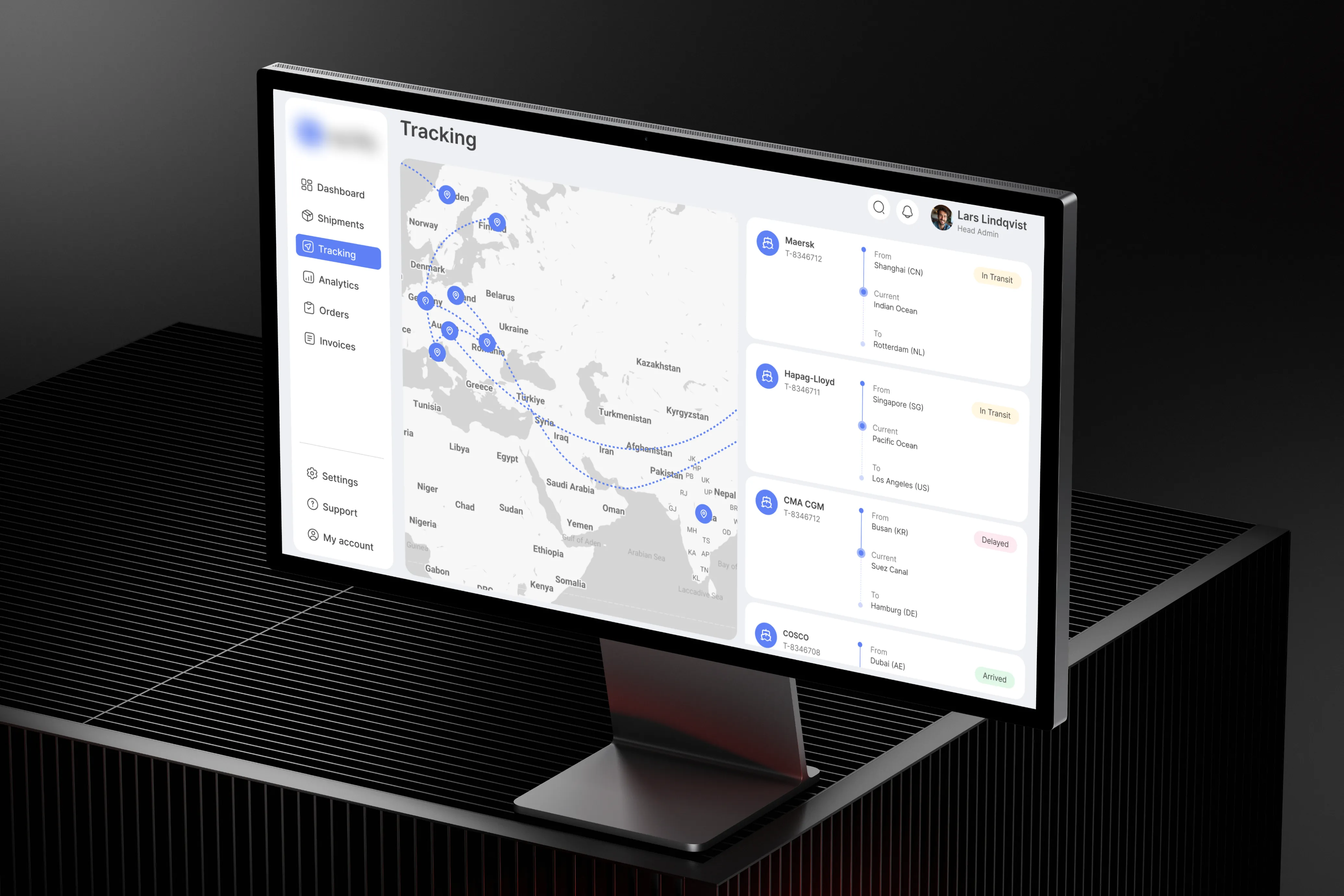
Real-time shipment tracking dashboard with exception alerts
CI/CD pipeline supporting weekly release cycles from day one
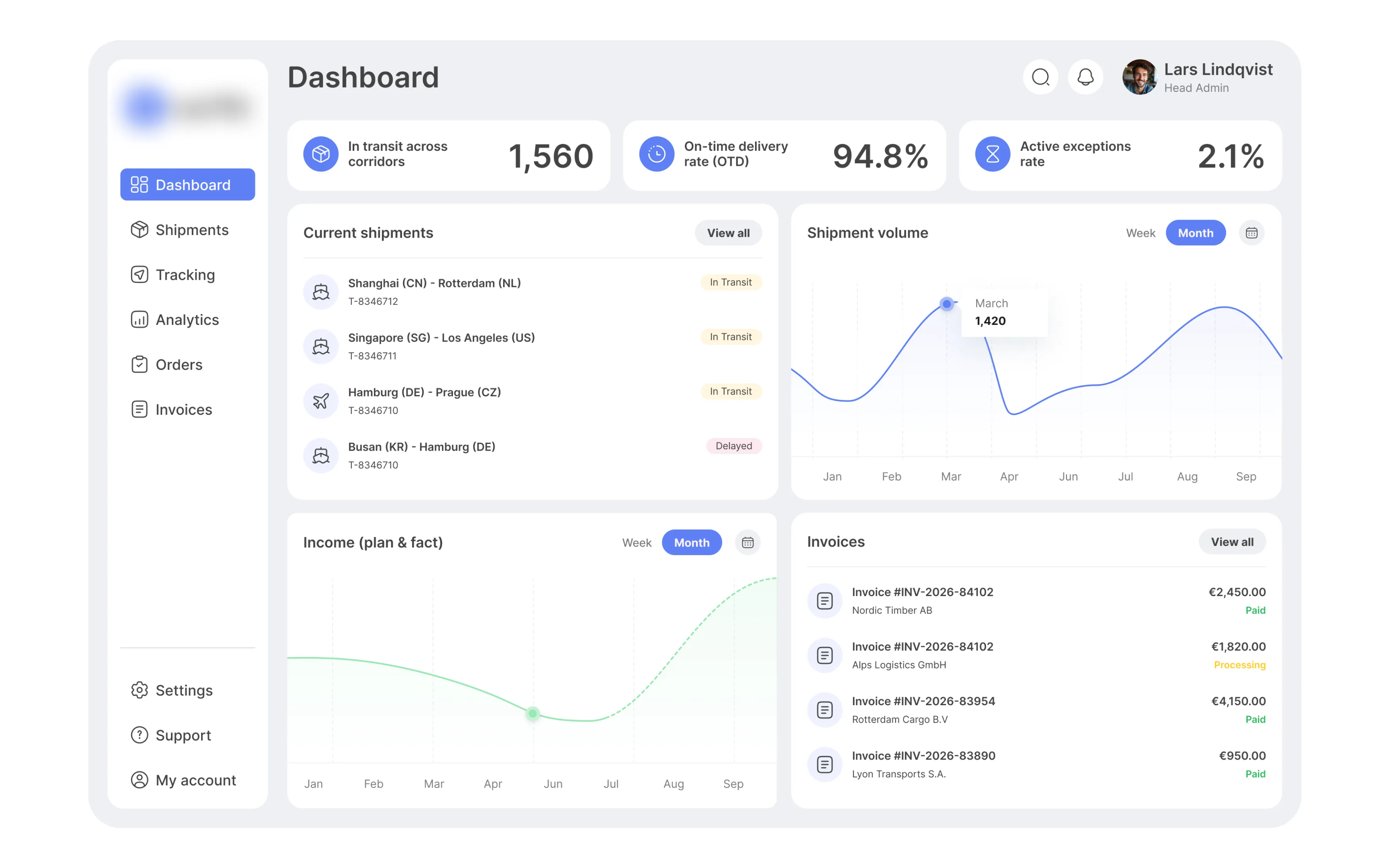
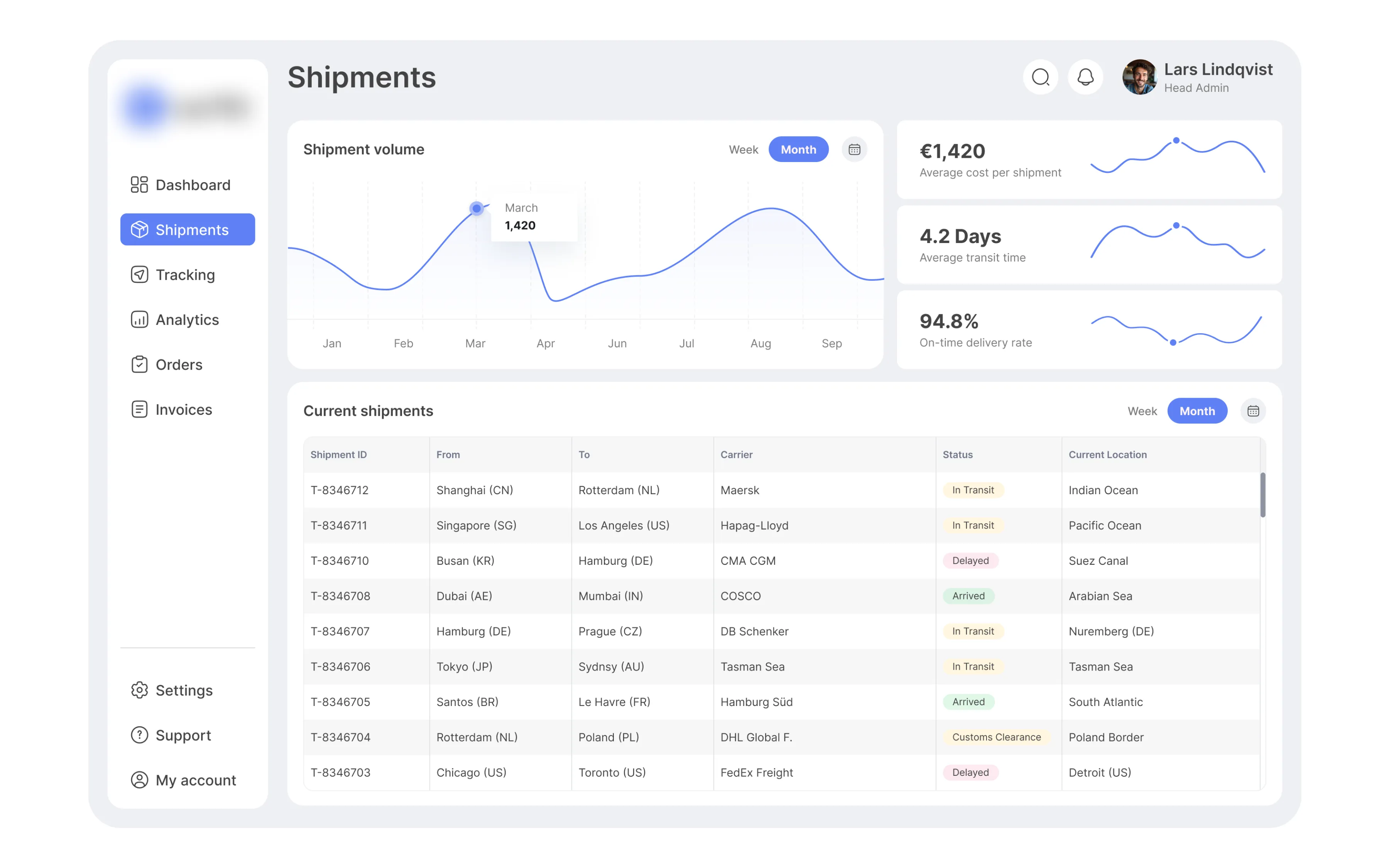
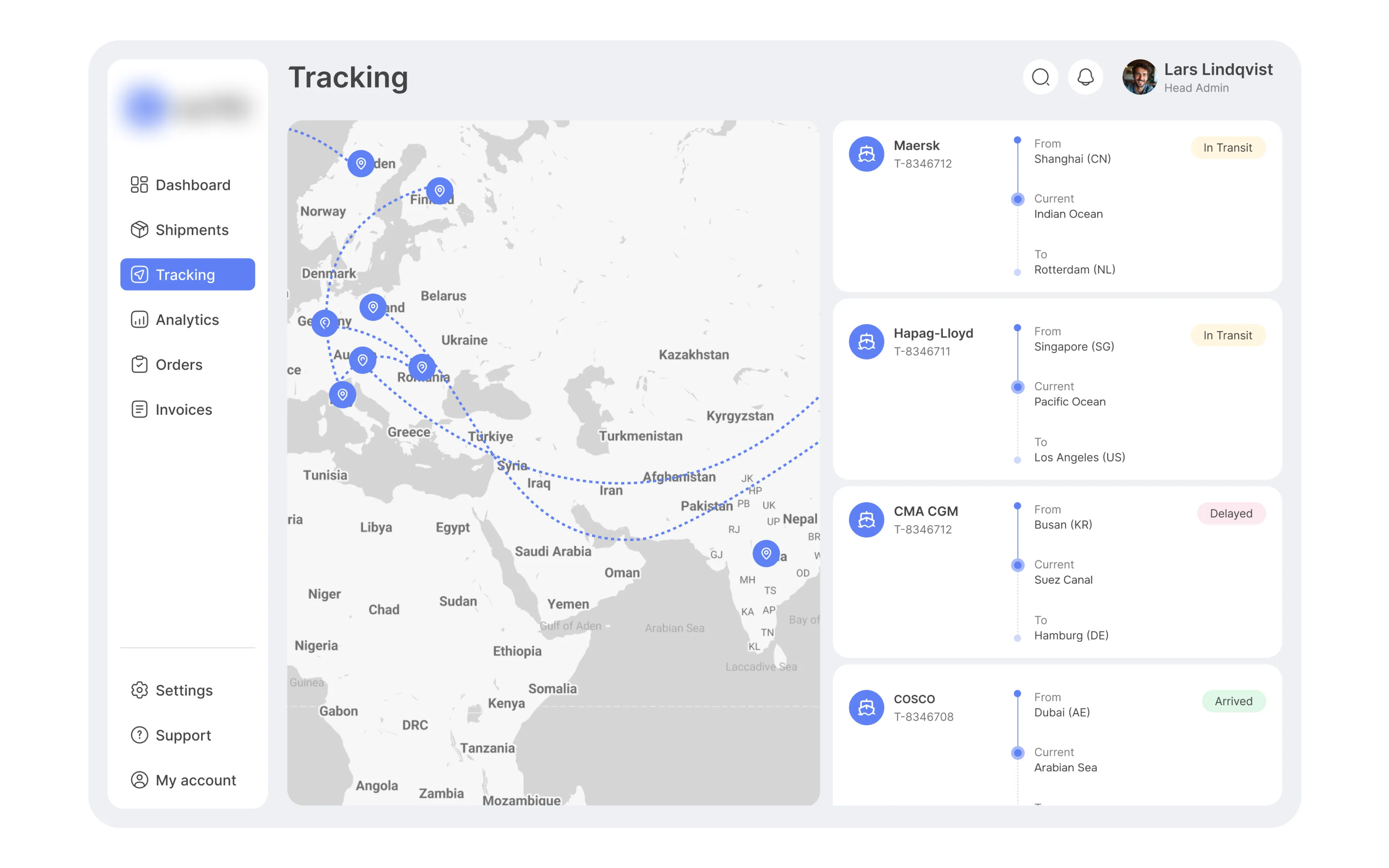
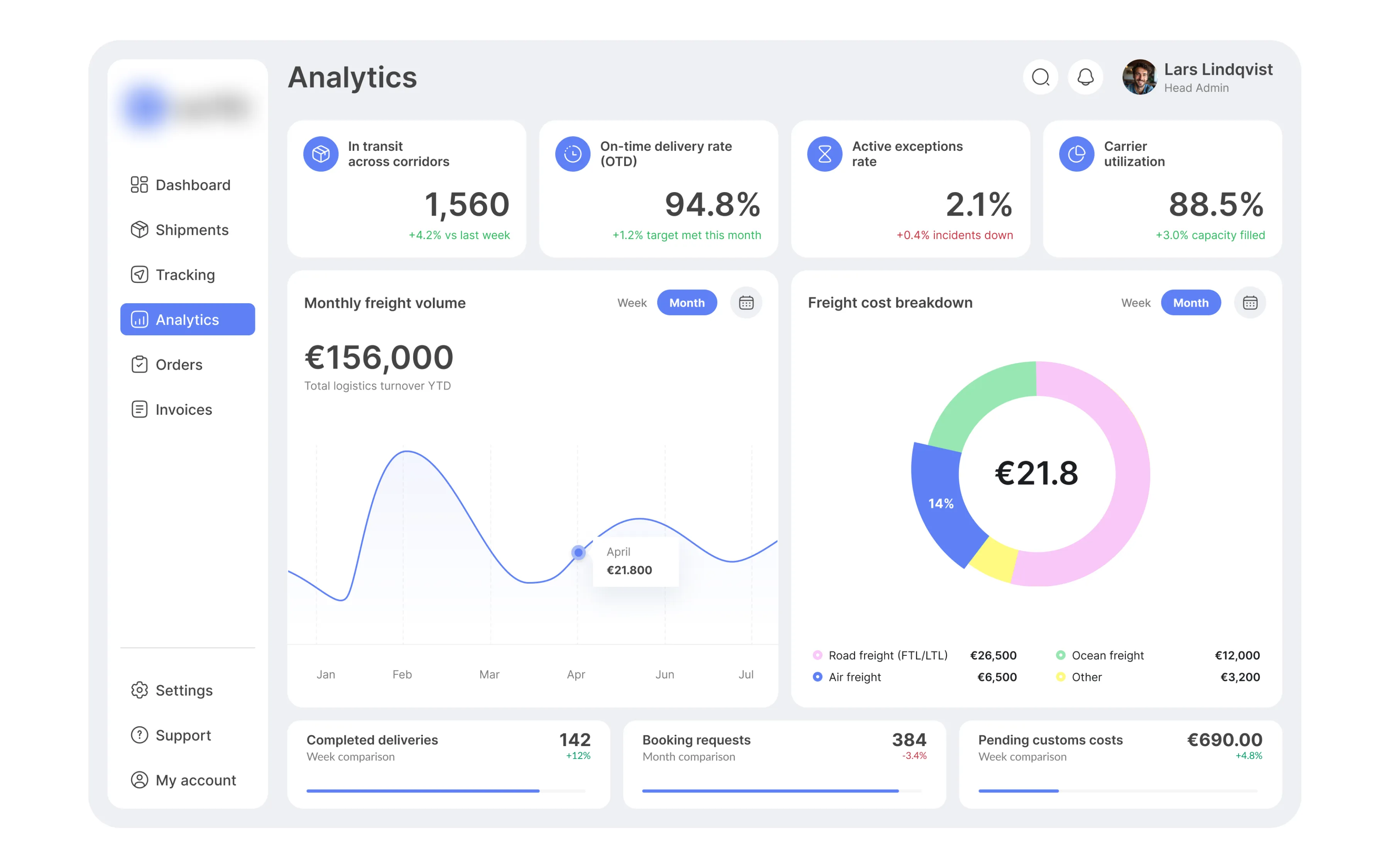
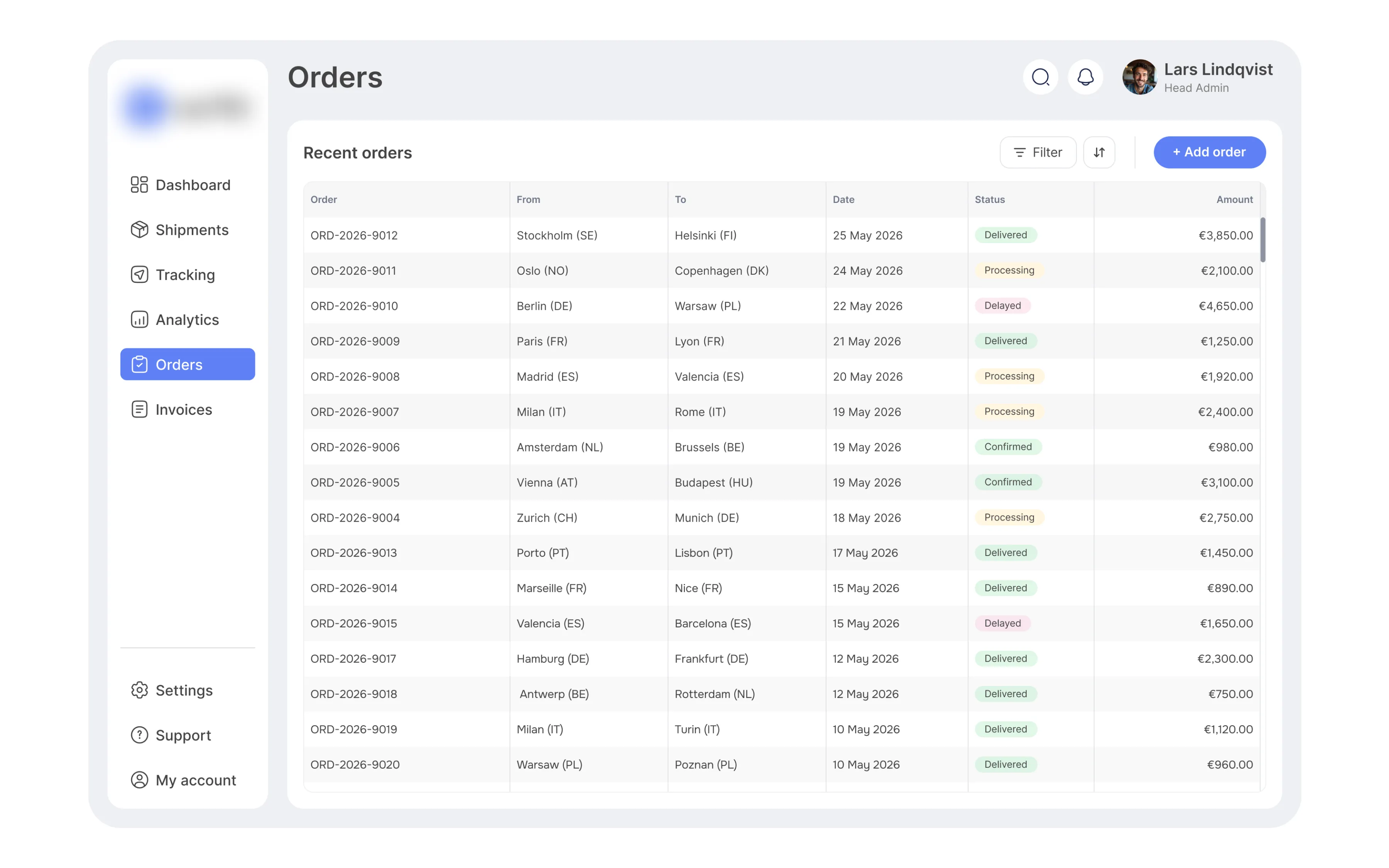
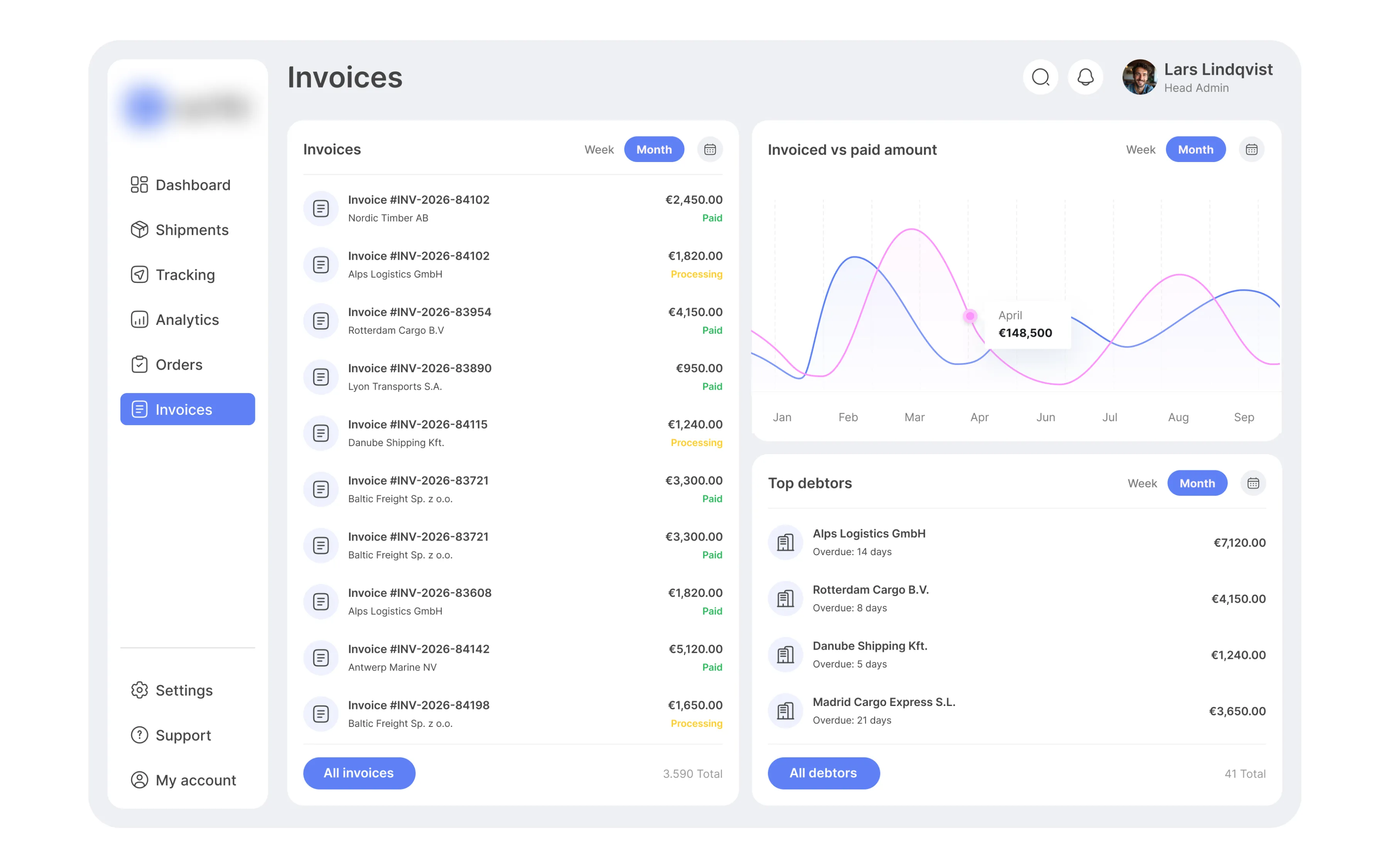
The data shown in this application interface during the case demonstration is not real customer data. All information presented is for demonstration purposes only.
Project team
1
Project manager
4
Back-end engineers
1
Team lead
3
Front-end engineers
1
Business analyst
1
DevOps engineer
1
UI/UX designer
2
QA engineers


Planning to launch a SaaS product?
Book a free consultation with Modsen to discuss your product idea or architecture readiness.
Development process
Delivered through Modsen AI-augmented software delivery model. Across the pipeline, AI took over the repetitive work to shorten time-to-delivery; a senior engineer signed off at every stage, so accuracy held before anything reached the partner's product.
Analysis and planning
Firstly, Modsen mapped the partner's carrier-integration needs and launch scenarios against a fixed go-to-market date. AI-assisted analysis of the carrier formats surfaced inconsistencies across EDI feeds and APIs up front, so the data model was right the first time, sparing the team costly rework mid-build.
UI/UX design
Shipment-tracking workflows were prototyped against real freight scenarios, including exceptions like delayed carriers and missing updates. AI-generated variants let the partner react to working flows early, while changes were still cheap, so fewer revisions surfaced once development started.
Development
Within Modsen AI-augmented delivery approach, routine scaffolding (API endpoints, data access layers, test fixtures) was generated and then reviewed line by line by senior engineers. That let the team spend its engineering hours on the parts that actually differentiate the product: the carrier-data normalization layer and the multi-tenant isolation logic.
Testing
AI-assisted test generation extended coverage alongside every feature instead of a costly push at the end, focused on carrier-data edge cases and tenant-isolation, where a post-launch defect would hit hardest. Catching them during development kept fix costs low and quality high.
Partner acceptance
The partner reviewed functionality through staged demos tied to real pilot-shipper scenarios, giving both teams a shared, concrete basis for sign-off ahead of launch.
Maintenance
Modsen continues to support the platform post-launch, monitoring carrier-integration performance under real shipment volume and rolling out feature requests gathered from the partner's early adopters.
Business value
Fewer manual status inquiries, more shipper confidence
68% fewer inquiries to the partner's support team due to the real-time visibility feature
100% uptime since launch, monitored by the Modsen team
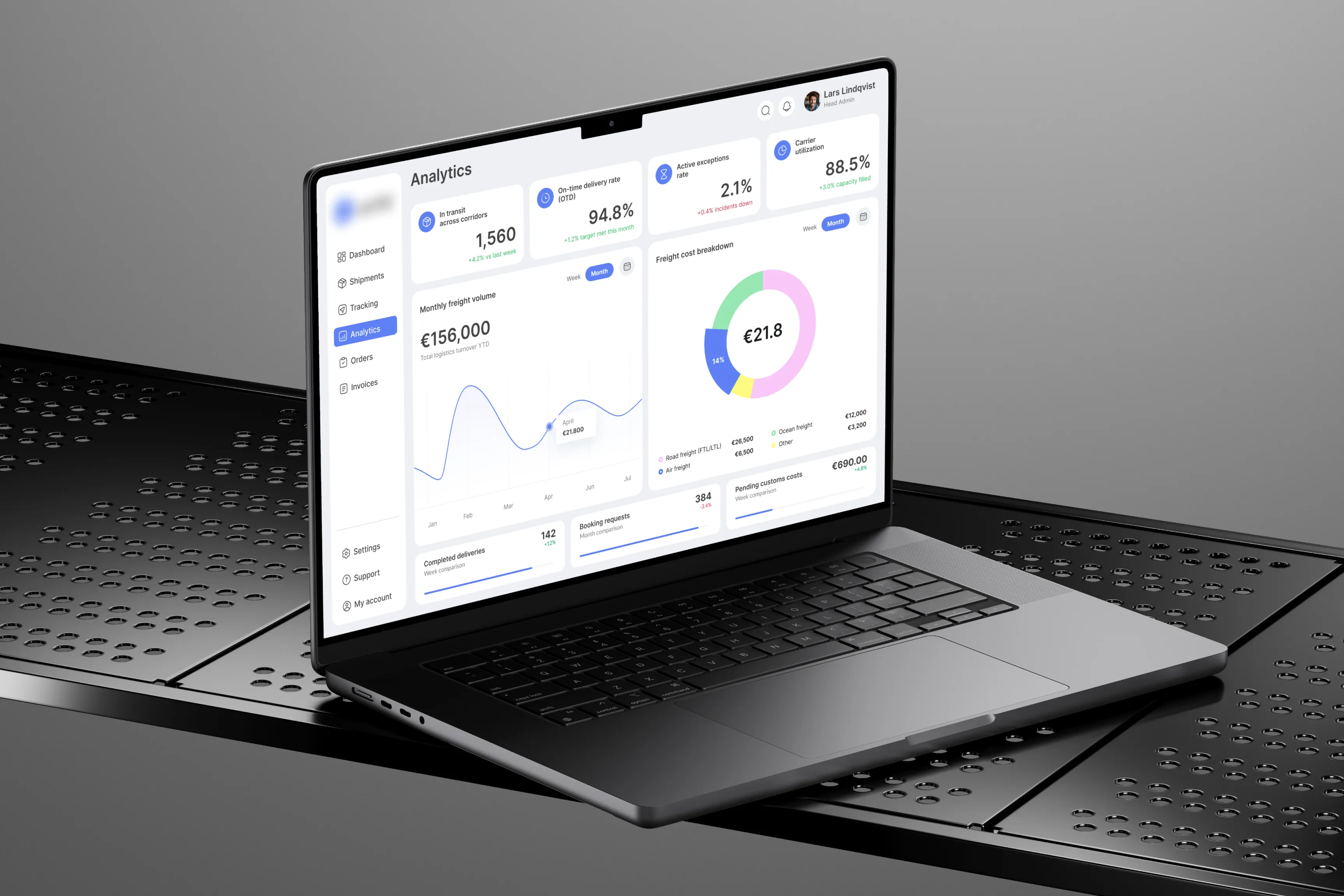
A carrier-integration model built to scale without rework
The data-normalization layer and multi-tenant architecture were designed for the partner's five-year growth plan
No architecture changes have been required as the partner has added new carriers and shipper segments
Faster path from architecture to launch
An engineer-reviewed, AI-augmented build process compressed the time between finalized requirements and a testable product
14 weeks after kickoff – the partner reached its first paying customer
Let's calculate the accurate cost and resources required for your project