
Fintech app development: Digital banking costs, features and AI integration in 2026
11 min read
Last updated: Jun 25, 2026
Summary
The global number of digital banking users is set to reach 2.5 billion by 2025. For engineering and product teams, that figure marks a shift from early adoption to a mature, competitive market where users benchmark your app against the best financial product they have ever used. This guide covers the full scope of fintech app development in 2026: app categories, must-have features, AI integration patterns with realistic cost estimates, a tech stack breakdown, and a framework for evaluating build partners.
Key takeaways
Your app category determines compliance architecture and budget before any feature decisions are made.
The 12 features covered here are the production baseline for any banking app in 2026, not a competitive advantage.
AI in a banking app is not a single line item – it breaks down into five separate integrations with different costs and different business cases, each of which needs to be scoped and justified independently.
The core tech stack for fintech is largely settled. The decision that actually drives budget variance is which core banking provider you integrate with.
The realistic cost range is $80,000–$500,000 depending on product type.
The clearest build partner red flags are no verifiable fintech projects, compliance scoped as a later phase, and reluctance to itemize estimates.

Dmitry Grishanovich
Head of .NET Department at Modsen
Types of fintech apps: Neobank, lending, wealth, payments
The category you're building in determines much of the architecture before a line of code is written. Whether you're targeting a full-featured mobile banking app or a narrower digital banking platform covering a single use case, the category sets your fintech app development priorities, compliance obligations, integration costs, and timeline.
Neobanks and digital-only banks. Products like Revolut and Monzo operate either on their own banking license or through a BaaS partner. An online banking app competing in this space needs a core banking integration from day one, plus multi-currency accounts, card issuance, real-time notifications, and KYC flows for every regulated market. Integration complexity here is consistently higher than in other categories.
Lending platforms. Companies like Affirm and Klarna built large businesses by embedding credit at the point of purchase. A lending app requires underwriting logic, credit bureau integrations, KYC/AML compliance, and repayment workflows. Credit scoring accuracy depends directly on real-time data pipelines.
Wealth management apps. Robinhood is one example of a category that now spans robo-advisory, portfolio tracking, and tax optimization tools for retail and institutional users. The key technical difference from other fintech app categories is latency: users executing trades expect real-time market data, and portfolio calculations need to reflect positions accurately at all times.
Payments and money transfers. Wise, PayPal, and Stripe represent different ends of this space. A fintech app in this category typically requires open banking API integrations, FX handling, and reconciliation logic that scales with transaction volume.
12 must-have banking app features in 2026
The list of expected fintech app features has grown considerably. These twelve represent the production baseline in 2026, grouped by function to make scope decisions easier.
Core
1. Account management. Balances, transaction history, and statement access across linked accounts. The choice between real-time sync and batch refresh affects user experience in ways that show up quickly in support volume.
2. Transactions and transfers. Payments between accounts and external banks. Most mobile banking apps use Plaid or open banking APIs for bank-to-bank connectivity. Check coverage in your target market before committing to a provider.
3. P2P payments and card management. Peer-to-peer transfers and card controls, including spend limits, merchant blocking, and instant card freeze.
Security
4. Biometric authentication. The global biometrics market will reach $150 billion by 2030. In 2025, more than half of mobile banking app users relied on biometric login. Offering only PIN-based authentication falls below what users already consider standard.
5. Real-time fraud alerts. Push notifications triggered by transaction pattern deviations, with immediate card freeze options.
Engagement
6. Push notifications and spending insights. Proactive alerts notify users when spending in a specific category exceeds their usual pattern, while insights break down transactions by merchant, category, and time period.
7. In-app chat and support. A hybrid model combining AI-assisted triage with human agent escalation outperforms pure chatbot flows on first-contact resolution rates.
AI
8. Chat copilot. A conversational interface for balance queries, transaction disputes, and guided financial decisions.
9. Predictive budgeting. Proactive alerts when a user trends toward overspending in a specific category, based on behavioral patterns rather than fixed rules.
Compliance
10. KYC and identity verification. Automated document checks, liveness verification, and sanctions screening confirm that a user can legally open and use an account.
11. Transaction monitoring and AML. Rule-based screening for known typologies, combined with an ML layer for anomalies the rules miss.
12. Audit trail and reporting. Exportable transaction records and regulatory reporting support. Required under PSD2, BSA, or equivalent frameworks.
AI integration patterns for banking apps
AI in digital banking has moved past the experimental phase. Teams building fintech apps in 2026 treat AI integration as a scoping question rather than a strategic one. Five patterns cover most of what fintech app development teams are building.
1. AI personal finance assistant
An AI finance assistant reads transaction history and answers natural language queries directly, without redirecting users to a filter screen. Building this requires an LLM layer, transaction classification, and a retrieval pipeline over the user's financial history. Its scope has expanded in 2025 to include budget goal tracking, recurring expense detection, and proactive savings suggestions.
2. Predictive notifications
Predictive models scoring transaction patterns against individual user behavior catch anomalies before they become problems. The marginal build cost drops significantly if ML infrastructure for fraud scoring is already in place, since both patterns share the same data foundation.
3. AI fraud scoring
AI in digital banking has changed fraud detection more thoroughly than in any other area. Traditional rule-based systems generate false-positive rates that erode user trust over time. ML-based behavioral models score each transaction against device fingerprint, geolocation, session behavior, and historical patterns simultaneously.
4. GenAI chat copilot
A copilot handling multi-turn conversations and executing account actions (transfer funds, freeze a card, open a dispute) is the most visible AI in banking apps that product teams invest in today. The architecture uses a hosted LLM with tool use and retrieval augmentation. Teams comparing RAG patterns and vector database options for this workload will find the detailed implementation breakdown in our guide on generative AI in banking: LLM and RAG.
5. Document processing for KYC
Automated extraction from passports, utility bills, and proof-of-income documents feeds directly into onboarding workflows and cuts processing time from days to minutes. This is one area where AI banking app development has delivered the clearest, most quantifiable return – faster onboarding reduces drop-off without sacrificing compliance quality.
Must-have security features and fraud detection
Biometric authentication handles login, but it does not protect transactions. Production fintech apps need layered security - device intelligence detecting compromised or jailbroken devices, behavioral analytics monitoring tap patterns and navigation sequences, and real-time fraud scoring at the transaction level. Each layer catches attack vectors the others miss. Teams that defer behavioral analytics to post-MVP typically end up retrofitting it at three to five times the original build cost.
For a full system design showing how these banking app features connect in a production architecture, see our AI fraud detection architecture breakdown.
Tech stack and architecture for modern fintech apps
Choosing a tech stack for a fintech app development is less about preference and more about the tradeoffs each choice creates: integration compatibility with the core banking layer, performance under regulatory scrutiny, and maintainability for a codebase that will need compliance updates regularly. The scope and depth of end-to-end custom software development services vary significantly across vendors in fintech competency.
Mobile. React Native and Flutter are both viable for production-grade consumer fintech apps in 2026, typically covering interface layers – onboarding flows, dashboards, and account screens – while core transaction and security modules remain in native Swift and Kotlin.
Backend. Node.js and Go are the most common choices. Go performs better under high-concurrency transaction loads; Node.js has a larger ecosystem and a shorter hiring ramp. Backend architecture is typically started as a modular monolith designed for gradual decomposition into microservices as transaction volume and regulatory data isolation requirements grow.
Cloud and data. AWS and GCP dominate for fintech deployments. Snowflake and BigQuery are standard for data infrastructure.
Core banking integration. A modern digital banking platform connects to a core banking provider rather than building ledger logic from scratch. Mambu, Thought Machine, and Temenos are the primary options for new builds, each with meaningfully different pricing models and geographic coverage.
Costs and timelines: From MVP to production
Fintech app development costs vary more than in most software categories because financial products carry compliance and security requirements that standard mobile apps don't. The ranges below reflect current market data from development teams across Central and Eastern Europe, Latin America, and Southeast Asia.
MVP ($80,000-$180,000, 4-6 months). Covers one core use case, foundational features, and the compliance requirements needed to operate legally. This range typically covers licensed payment rail, basic KYC, and a single user-facing flow – enough for a fintech app development team to validate product-market fit but not a full production release.
Production-ready ($180,000-500,000, 6-12 months). Adds the complete feature set, security testing, performance optimization, and operational tooling. The upper end applies to products with complex core banking integrations, multi-currency support, or multiple AI patterns.
Maintenance. Annual maintenance for a fintech app runs 15-20% of the initial build cost, covering security updates, dependency patching, and compliance changes as regulations evolve.
Feature | Estimated cost |
|---|---|
KYC and liveness verification | $20,000-$40,000 |
Core banking integration | $30,000-$60,000 |
AI fraud scoring module | $40,000-$80,000 |
AI personal finance assistant | $30,000-$60,000 |
GenAI chat copilot | $30,000-$70,000 |
Document processing for KYC | $20,000-$50,000 |
Per-feature cost reference
Build vs buy: When to use Banking-as-a-Service
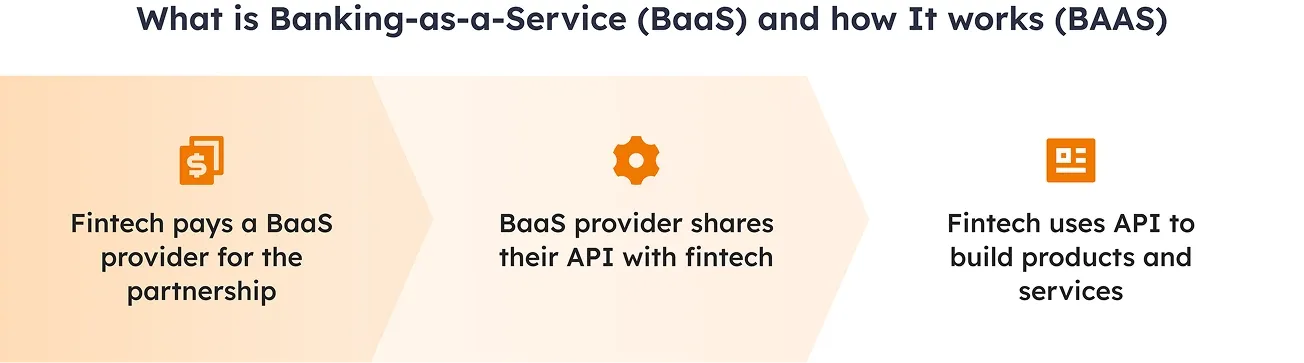
BaaS providers (Solaris, Treasury Prime, and others) let teams launch financial products on top of licensed infrastructure rather than building or acquiring it. A BaaS-based product can reach market in three to four months versus the six to twelve that full-stack fintech app development typically requires.
The tradeoff is margin and control. BaaS fees (typically a percentage of transaction volume plus monthly minimums) compound as you scale. Teams with long-term scale ambitions usually find BaaS works best as a launch mechanism, with a migration to owned infrastructure built into the roadmap from the start. For context on how platform strategy and AI adoption intersect in financial services, see the AI in financial services hub.
How to pick a fintech app build partner
The number of vendors offering fintech app development has grown, but quality variance is significant. Experience building e-commerce or content platforms does not transfer automatically to regulated financial products. For a breakdown of engagement models, our guide on fintech development outsourcing models covers full project outsourcing, staff augmentation, and hybrid approaches in detail.
Five things to evaluate before signing with any partner:
1. Fintech vertical experience. Ask for specific fintech app development projects, not a general portfolio. Review how they handled core banking integrations, compliance implementation, and security architecture. To see what a documented fintech track record looks like in practice, see our fintech app portfolio.
2. AI competency. Verify that the team has built and deployed AI features in production fintech products. Ask which LLM providers they've worked with and how they approach RAG implementation in a financial context.
3. Compliance readiness. Ask specifically how they manage KYC vendor integration, AML logic, and audit trail requirements. Teams that treat compliance as an afterthought will cost more in rework than they save on day rates.
4. Post-launch operations. Understand the model for maintenance, incident response, and regulatory update support.
5. Transparent pricing. Fixed-price works well for tightly scoped MVPs, while time-and-materials fits complex products where scope evolves. Reluctance to itemize estimates is a red flag.
Not sure where to start with your fintech app?
Scoping a regulated financial product is different from a standard mobile app build. We'll help you define the right category, compliance requirements, and AI integration scope before a line of code is written.
FAQ
How much does fintech app development cost in 2026?
What are the must-have features of an online banking app?
How long does it take to build a neobank app?
What AI features should a banking app include?
Should I build a fintech app in-house or outsource?
Conclusion
Fintech app development in 2026 requires balancing rising user expectations, genuinely useful AI patterns, and compliance requirements that grow more demanding as products scale. Teams that build well start with a realistic budget, treat compliance as an architecture decision rather than a checklist item, and choose AI patterns based on actual user value.
Whether you need a full product build, staff augmentation, or architecture consulting for AI banking app development services, the Modsen fintech app development team covers neobank, lending, wealth, and payments products with a track record in AI integration and regulatory compliance.
To review recent examples, see our Modsen fintech app portfolio.
References
1.
Statista. (2025). Digital Banking Users Worldwide by Region. Statista Forecasts Platform.
2.
Grand View Research. (2024). Biometric Technology Market Worth $150.58 Billion By 2030
3.
McKinsey & Company. (2024). Global Banking Annual Review. McKinsey Financial Services.
4.
Boston Consulting Group. (2025). Fintechs: Scaled Winners and Emerging Disruptors. BCG Publications.
5.
Stanford HAI. (2024). AI Index Report 2024. Stanford University Human-Centered AI Institute.
Read more






Get a weekly dose of first-hand tech insights delivered directly to your inbox