Custom ERP Development for a European EV Manufacturer
Turning complex automotive operations into a controlled, predictable system.
45%
more accurate data-driven insights
37%
fewer production disruptions
15%
improvement in on-time delivery
Partner
A leading car manufacturer in the European automotive market, renowned for its commitment to innovation and high-quality electric vehicles.
Partner’s challenges
Our partner needed to replace a legacy ERP system with a modern, integrated platform to improve operations. The main challenges included:
Solutions proposed by Modsen
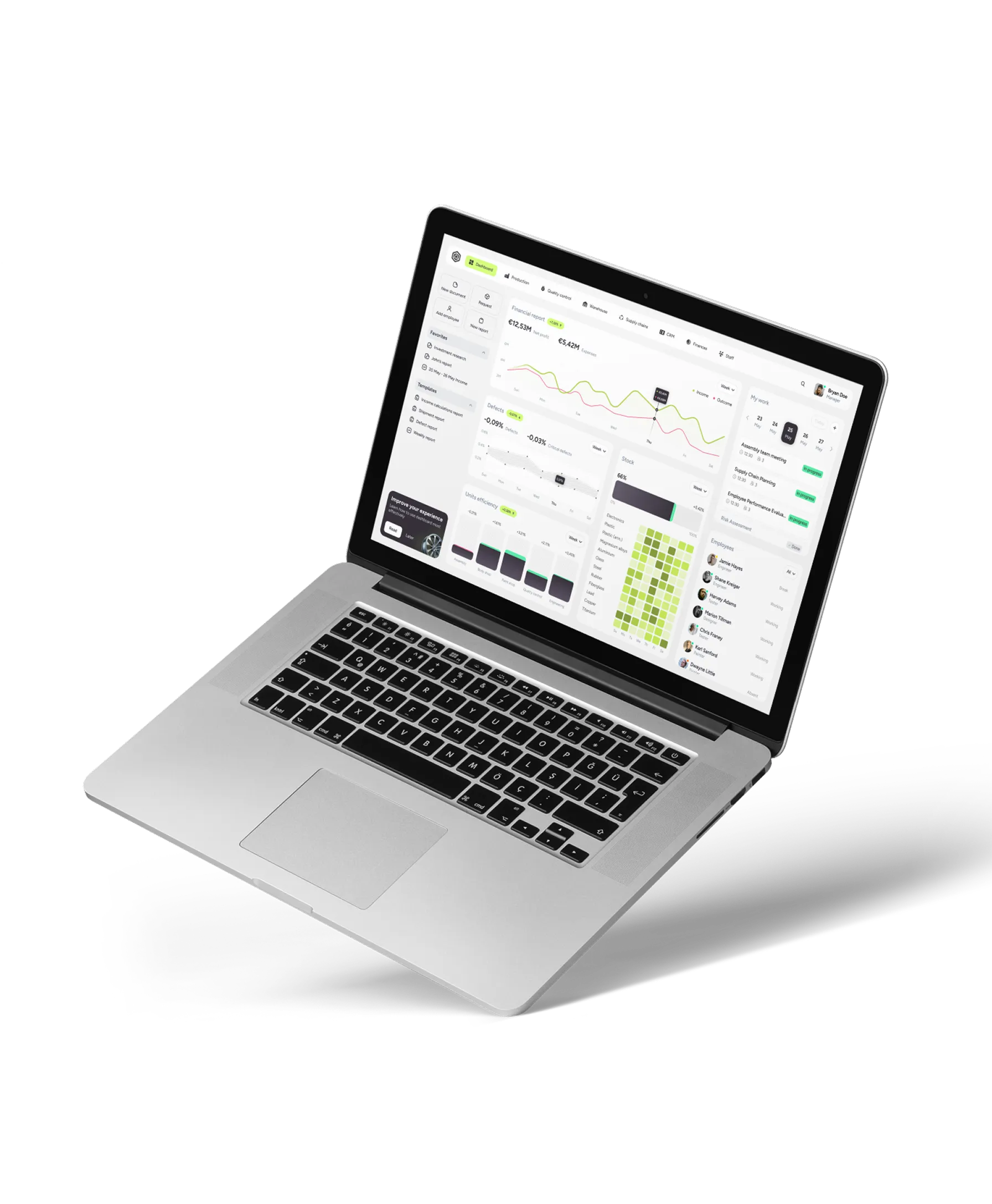
New end-to-end integrated ERP platform
Built-in cost analytics & data-driven root cause analysis
Real-time financial & profitability dashboards
API-first integration with MES, PLM, IoT
Planning & supplier visibility tools
User-friendly interfaces for business users
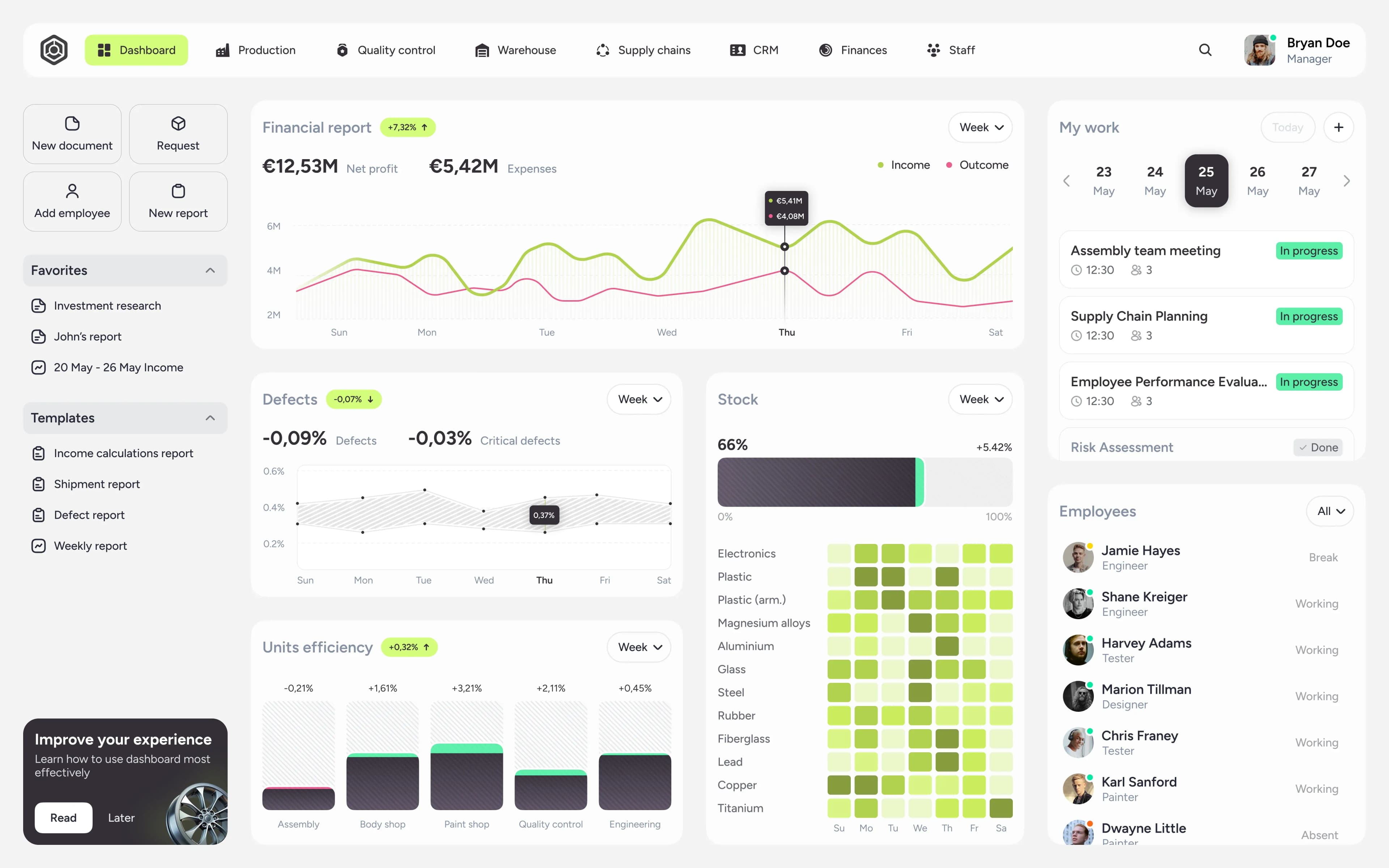
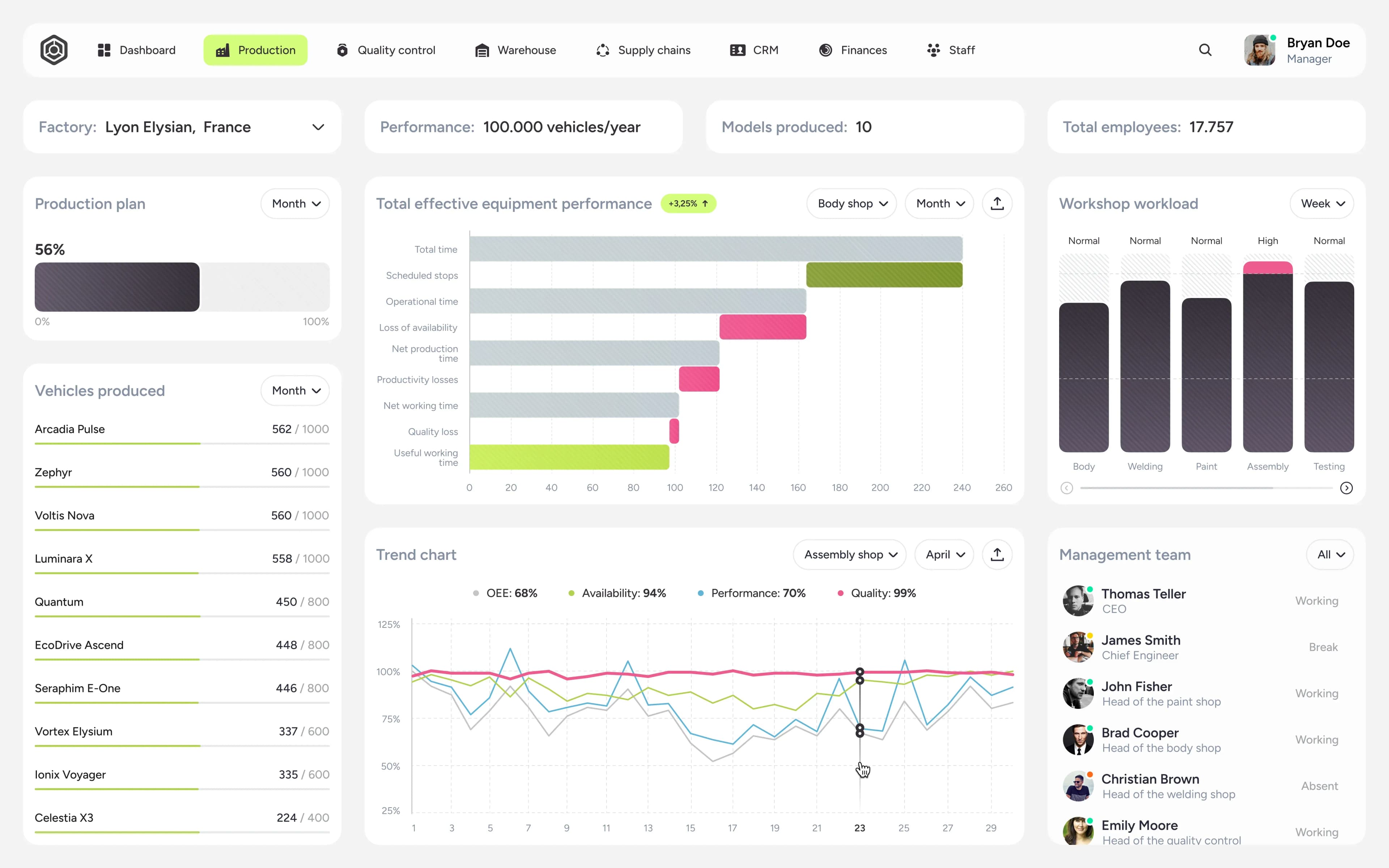
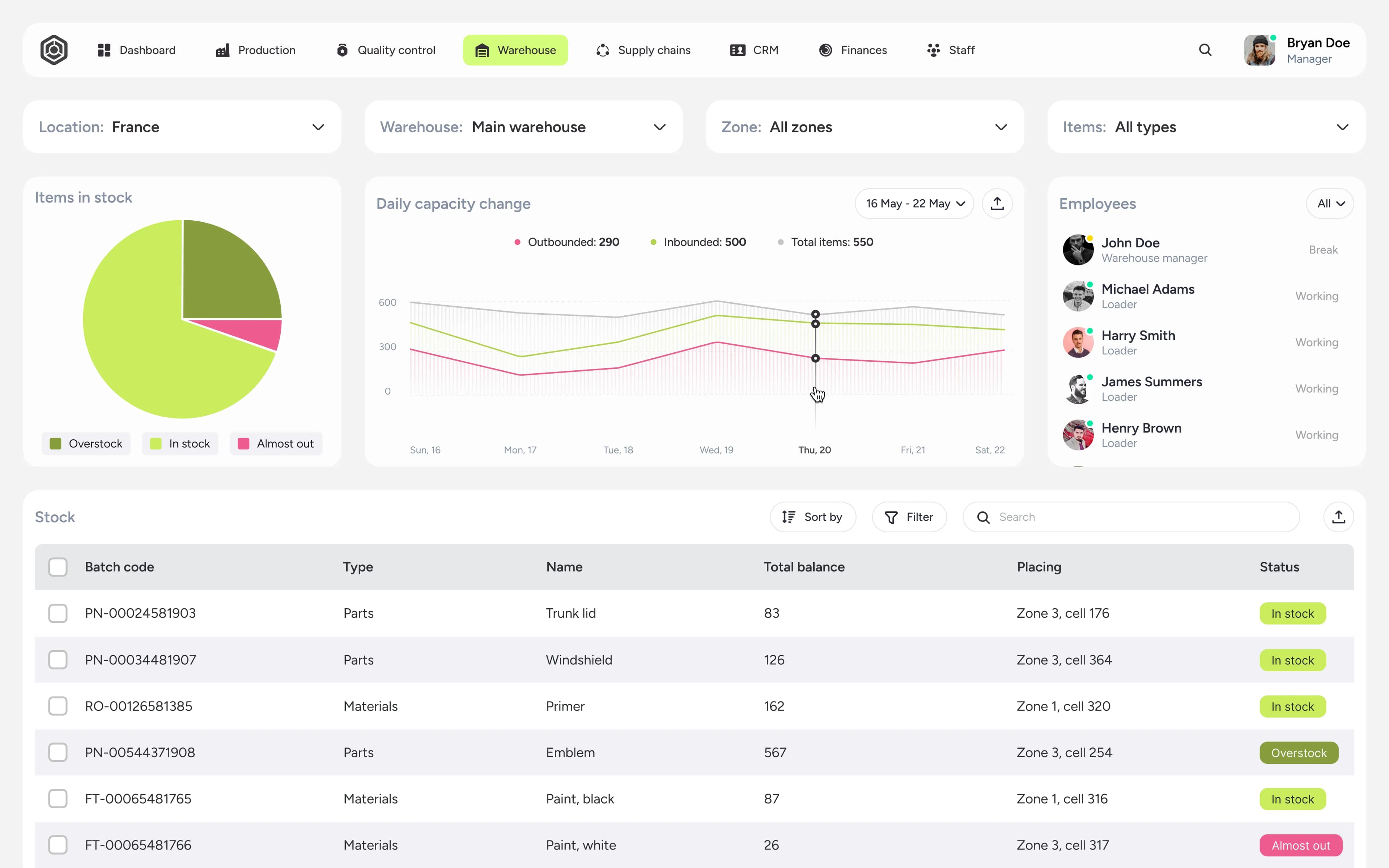
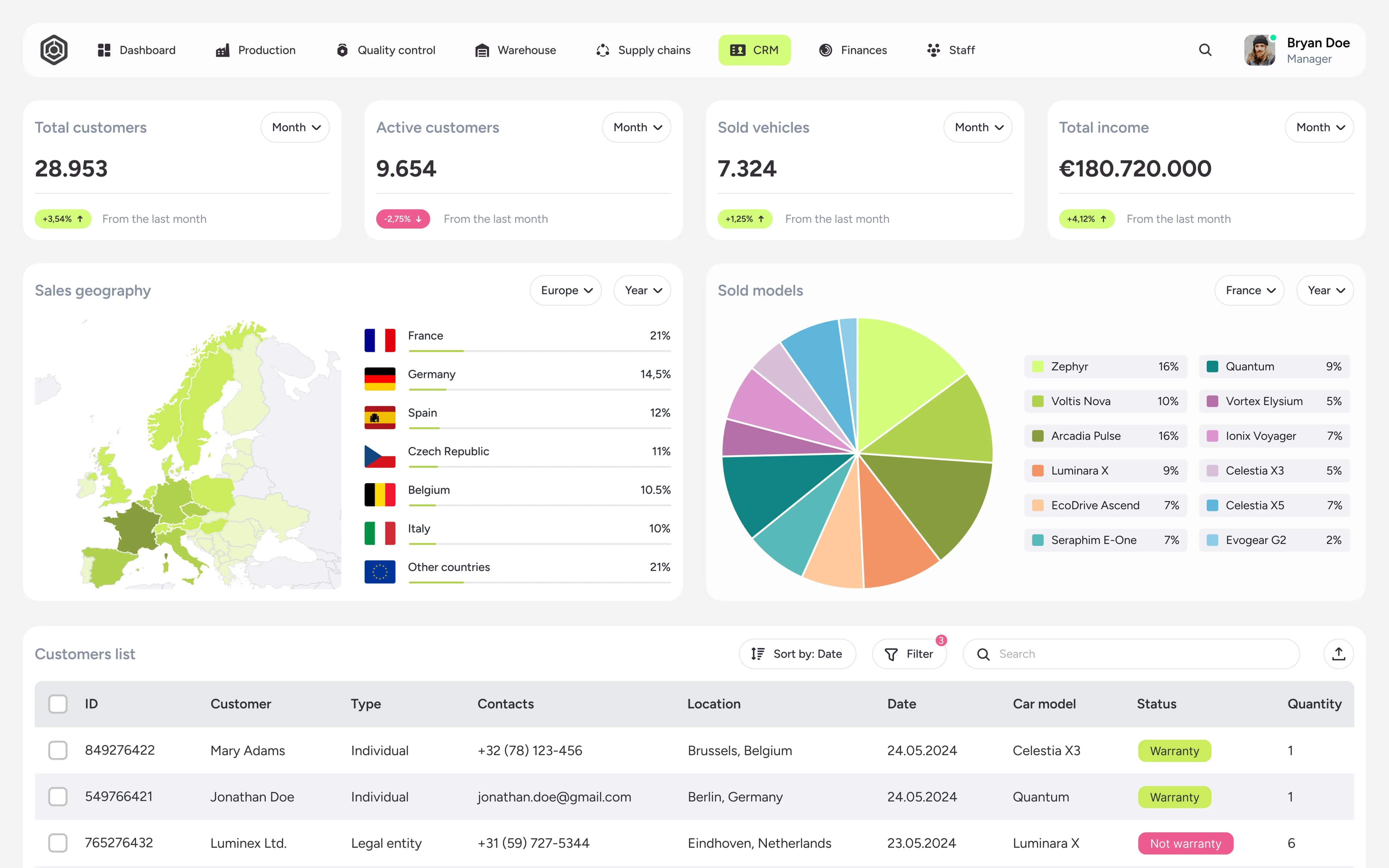
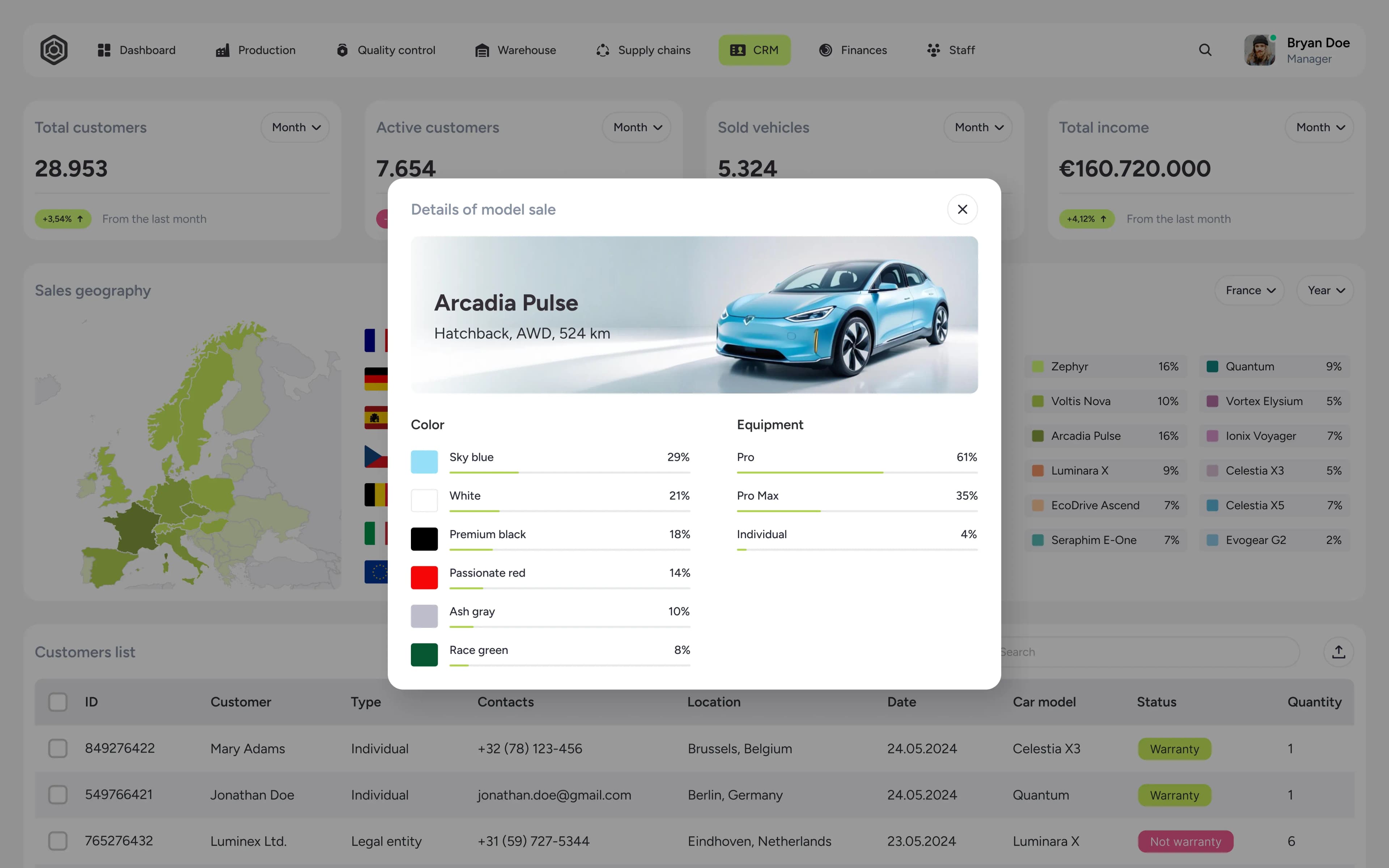
The data shown in this application interface during the case demonstration is not real customer data. All information presented is for demonstration purposes only.
Project team
1
Project manager
1
Business analyst
1
Solution architect
1
Team leader
2
UX/UI designers
5
Software engineers
1
Integration engineer
1
Data/analytics engineer
1
DevOps engineer
2
QA engineers
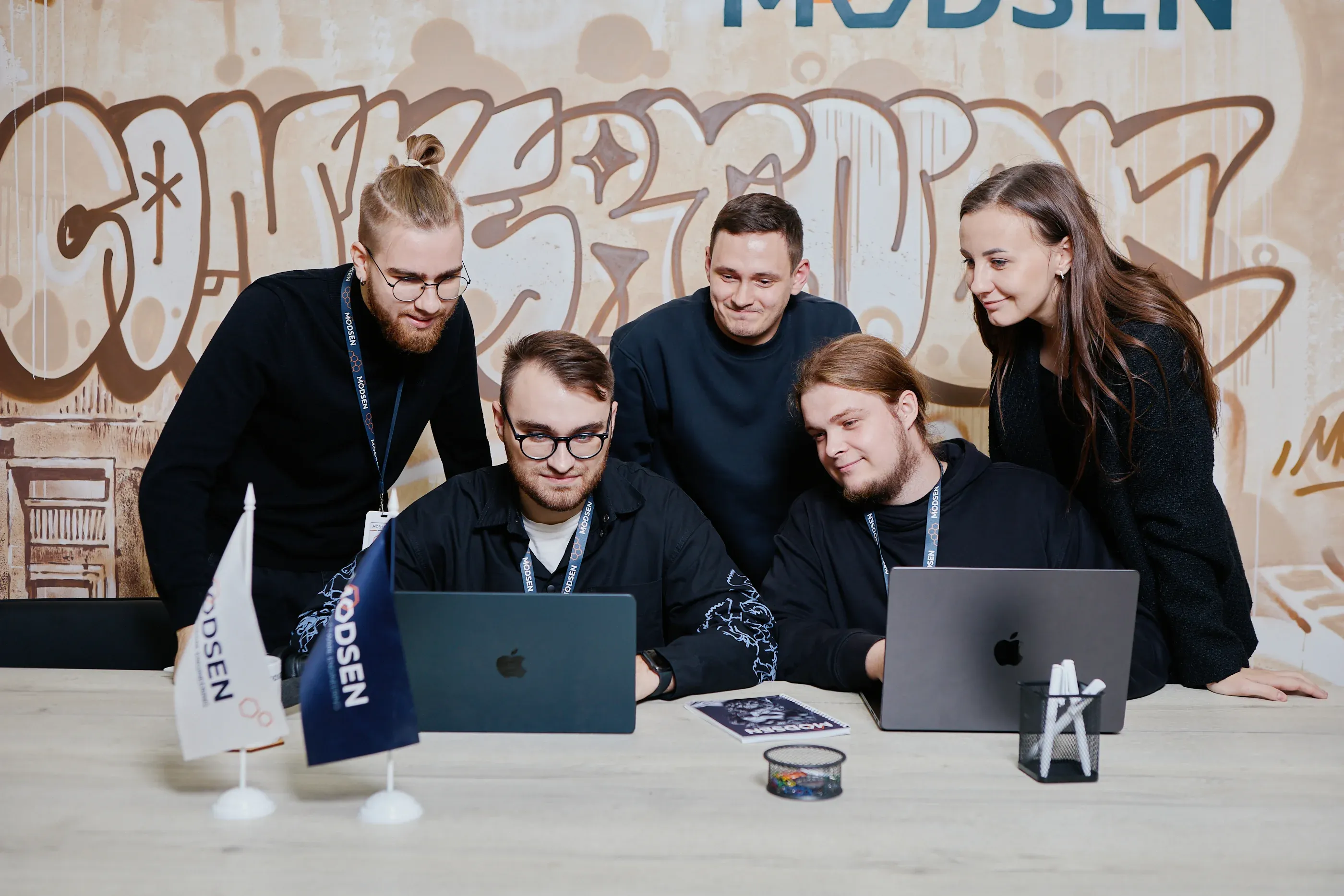

Facing similar challenges for your company?
Book a free call with Modsen to discuss how we can bring clarity, control, and predictability to your automotive operations.
Development process
Analysis & Planning
We started with a deep analysis of business processes across production, supply chain, and finance. At this stage, we aligned system architecture, priorities, and roadmap with real operational goals of the automotive business to reduce risks and avoid unnecessary costs.
UX/UI
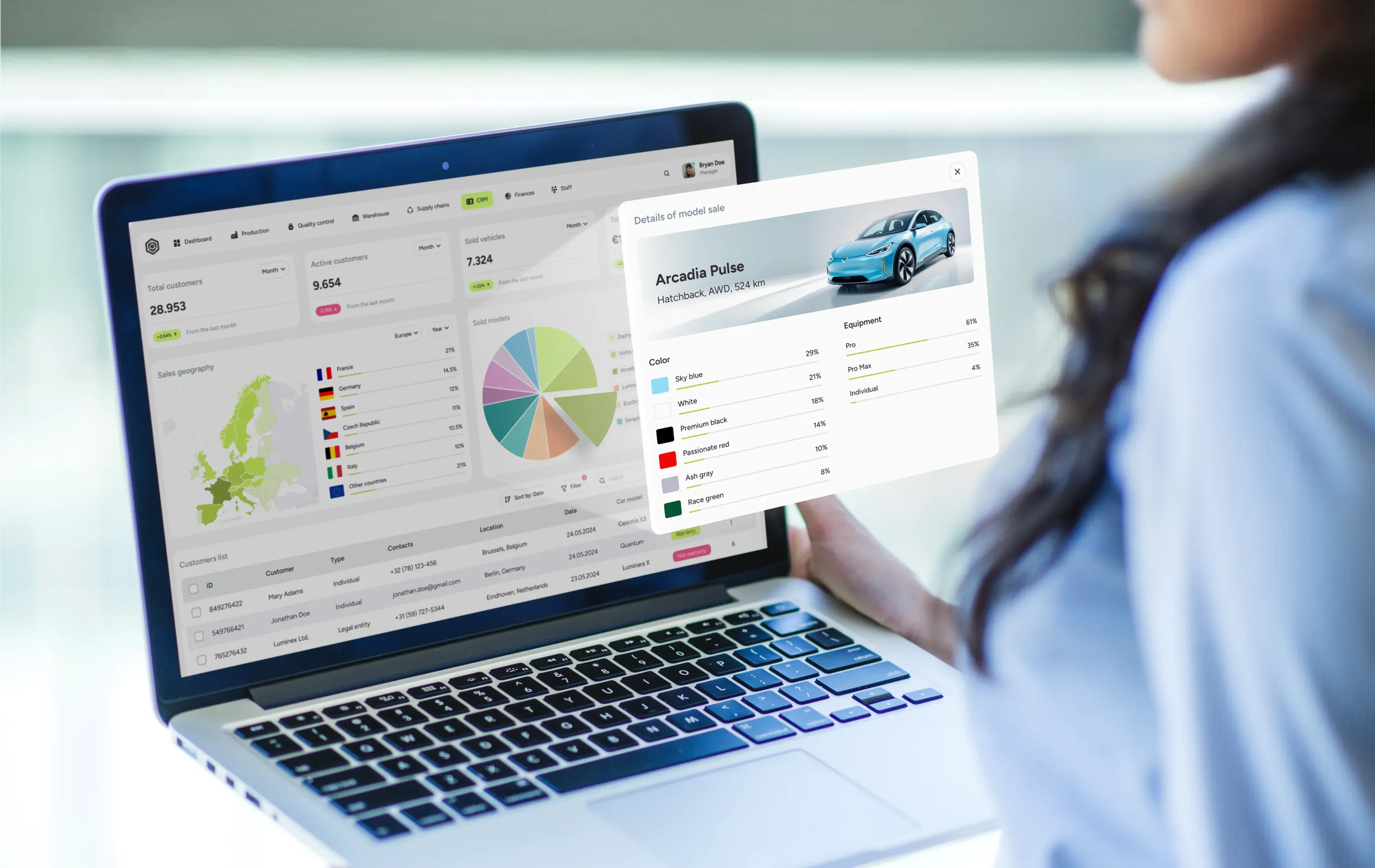
Our Design Studio researched users, roles, and business scenarios specific to automotive operations. Early prototypes allowed the partner to see and validate how the ERP would look and work before development starts. Design guidelines and unified standards ensured consistency across all modules.
Development
Development was organized in structured iterations aligned with business priorities. Each sprint delivered measurable functionality – planning, integrations, or reporting – rather than abstract technical progress.
We focused on reliability, scalability, and data consistency, ensuring the ERP could handle real automotive workloads: high transaction volumes, complex configurations, and tight production timelines. Progress, risks, and milestones were fully transparent for the partner.
Testing
Testing was deeply embedded into the development process, not treated as a final step. We validated business logic, integrations, data accuracy, performance, and security across real-life automotive scenarios. Special attention was given to critical areas: financial calculations, traceability, supplier data, and production-related workflows.
Partner acceptance
During acceptance, the partner validated the ERP against agreed business requirements with full visibility into system behavior and data flows. Our team supported this phase closely, ensuring smooth knowledge transfer and quick resolution of any questions.
Maintenance
After launching, we provided ongoing support, monitoring, and controlled system improvements. The ERP remained stable, secure, and adaptable as production volumes grew; processes evolved, or new integrations were required.
Business value
Full operational control across the automotive value chain
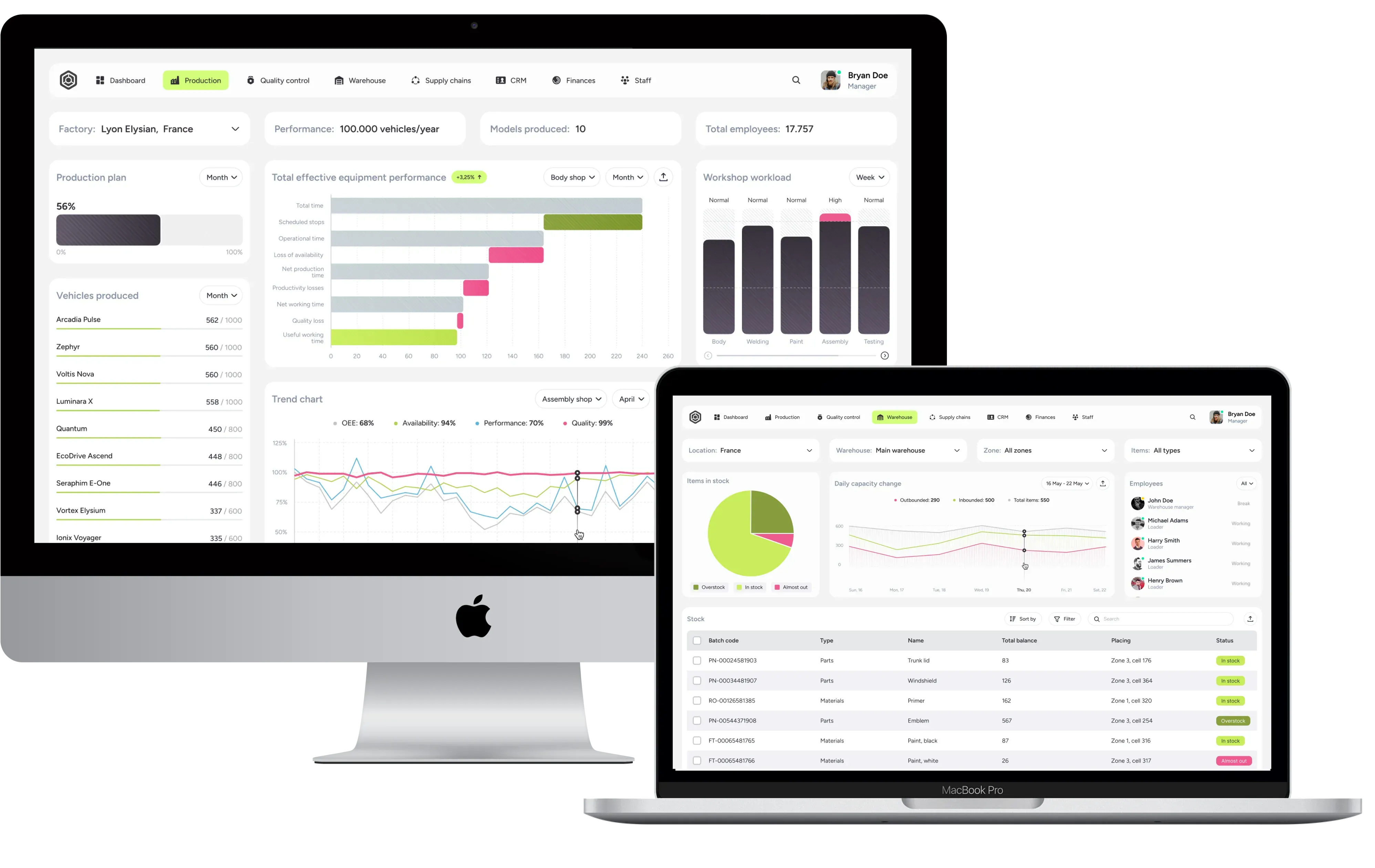
Clear cost ownership and predictable profitability
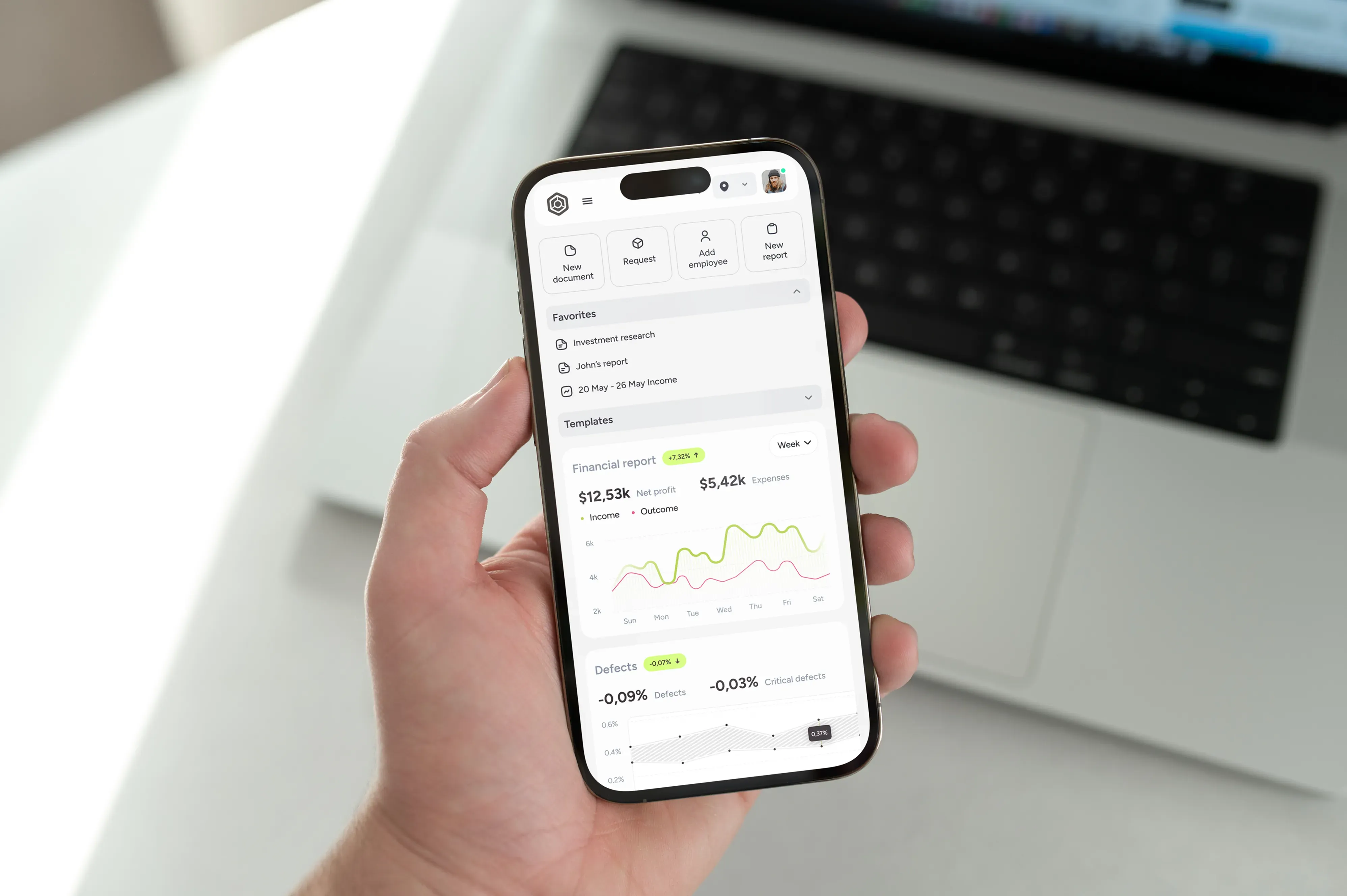
Stable EV production and reliable delivery commitments
Let's calculate the accurate cost and resources required for your project