
FINTECH SOFTWARE DEVELOPMENT FOR EUROPEAN BUSINESSES
European fintech software development is the process of building and modernising payment, banking, lending and crypto-asset platforms for regulated multi-country operations. Modsen team builds such platforms for banks, payment firms and lenders working across several European countries.

European fintech software development expertise in numbers
14+ years
in fintech software development
20+
fintech solutions across European markets
3 core
European markets – UK, DACH, Northern Italy
European
regulatory coverage: GDPR, nFADP, DORA-aligned, PSD2
AI-ready
delivery of fraud, KYC, credit scoring, RAG
Dedicated
team of senior fintech software developers
What we can help you implement
Companies engage us at different stages – building a product from scratch, extending an existing team, reassessing architecture before a second market, or accelerating delivery. The entry point determines the contract.
Build a new fintech SaaS product from scratch
Discovery, regulatory scoping, architecture, MVP and launch under one contract.
Scale your fintech engineering team
Engineers join your existing team, your backlog and your ceremonies. No parallel vendor process, no separate roadmap.
Fintech consulting & product strategy
Product strategy, architecture and cost audit, scaling plan.
Bring AI agents into your product delivery
AI tooling inside your own delivery process: code generation, test coverage, documentation, vulnerability scanning.



Discuss your fintech project
Tell us what you’re building and where you’re launching. We’ll help you understand what your technology setup needs to support, from compliance to architecture and team expertise.
European fintech software case studies
As a fintech software development company in Europe, Modsen supports financial businesses with both custom software development and team augmentation, from automating document processing to modernising banking platforms.
Value
Zero performance errors
~9× productivity on document handling
~63% lower operating costs

Machine learning document processing in finance
Custom software development
Challenge
A European consumer lending and investment provider had 80% of its data locked in PDFs, emails and photos. Manual processing ate up to 60% of the working week and carried compliance risk.
Solution
Modsen team built an ML pipeline – OCR capture, data extraction and validation, automated classification, anomaly detection – with GDPR-aligned checks and role-based cloud storage.
Value
Zero performance errors
~9× productivity on document handling
~63% lower operating costs
Value
2× faster development
100% fintech expertise gap closed
34 engineers, ongoing since March 2022


Scaling a banking platform with an extended fintech engineering team
IT staff augmentation
Challenge
A Central European bank with 50+ branches hit the limits of its in-house team mid-scaling. Outdated payment systems had to be modernised without interrupting live banking operations.
Solution
Senior engineers with 5+ years in financial systems embedded into the in-house team – payment system replacement, code modernisation, platform changes for new business processes.
Value
2× faster development
100% fintech expertise gap closed
34 engineers, ongoing since March 2022
Top custom software development partner






Custom fintech software development services
Custom banking and neobanking development
Digital banking app development
Payment gateway development
Digital wallet development
Trading platform development
Lending software development
Open banking & API integration
DeFi & blockchain development
European fintech compliance software for regulated products
Regulatory requirements increasingly shape the software itself: the data you collect, the workflows you run, the controls you apply and the evidence you can produce. As a European & EU fintech software development company, Modsen team turns rules into data fields, workflows and evidence the product generates itself.
UK Consumer Duty
FCA authorisation and reporting, UK GDPR, UK Open Banking standards

31 Jul 2023/ closed products 31 Jul 2024
DORA
ICT risk and third-party registers, incident reporting, resilience testing
17 Jan 2025
EAA
Accessibility obligations for consumer banking and payment services
28 Jun 2025
AMLR
Single EU AML/CFT framework regimes
10 Jul 2027
eIDAS 2.0/EUDI Wallet
Member state wallets and qualified signatures for onboarding
Wallets expected during 2026
PSD2 → PSD3/PSR
SCA, TPP access to accounts, fraud reporting; PSD3 and PSR add single fraud-liability and data rules
PSD2 in force; PSD3/PSR pending
UK Consumer Duty
FCA authorisation and reporting, UK GDPR, UK Open Banking standards
31 Jul 2023/ closed products 31 Jul 2024
DORA
ICT risk and third-party registers, incident reporting, resilience testing
17 Jan 2025
EAA
Accessibility obligations for consumer banking and payment services
28 Jun 2025
AMLR
Single EU AML/CFT framework regimes
10 Jul 2027
eIDAS 2.0/EUDI Wallet
Member state wallets and qualified signatures for onboarding
Wallets expected during 2026
PSD2 → PSD3/PSR
SCA, TPP access to accounts, fraud reporting; PSD3 and PSR add single fraud-liability and data rules
PSD2 in force; PSD3/PSR pending
FCA-aligned delivery for the UK market
UK open banking software development follows its own standards: FCA authorisation and reporting, UK GDPR, Consumer Duty outcomes evidenced in product data, Faster Payments and UK Open Banking conformance. One core, a British rule module on top.
DORA operational resilience engineering
DORA fintech software development covers ICT risk and third-party registers, incident classification inside regulatory deadlines, resilience testing including TLPT for larger entities, and logging that holds up under scrutiny. DORA compliance software earns its place when supervisory artefacts are generated by the system.
Accessible banking under the EAA and GDPR data rights
Accessibility stops being a retrofit: Accessible interfaces, authentication and customer communications, alternative authentication routes, readable statements. Alongside it, digital banking software development in Europe treats GDPR subject rights (access, portability, erasure) as product functions with a queue and an SLA. Result: fewer complaints reaching the supervisor.
AMLR-ready KYC, EUDI Wallet onboarding and trust services
KYC and KYB flows, sanctions and PEP screening, transaction monitoring, case management for AML officers – that is the substance of EU AML software development and of KYC software development in Europe under one rulebook. EUDI Wallet integration adds verified attributes and qualified signatures at onboarding, with the classic path kept alive alongside it. Fewer onboarding drop-offs, one AML model instead of one per country.
PSD2 today and PSD3/PSR-ready architecture
We build strong customer authentication, TPP access through APIs, fraud monitoring and supervisory reporting against PSD2 as it stands. PSD3-ready payment software isolates what the new rules will touch (liability logic, transaction data, reporting) behind configuration. When adoption lands, you change settings and reports.
Lending, BNPL and crypto-asset platforms for the European market
European fintech software development has to absorb new regulatory requirements without slowing down product development. Modsen helps financial companies turn these requirements into software changes, from lending and BNPL workflows to MiCA-related crypto-asset functionality and Travel Rule integrations.
CCD2-ready lending and BNPL workflows
CCD2 lending software brings broader consumer credit requirements into product logic. We can help implement creditworthiness assessment, human review, pre-contractual information, credit-cost limits, withdrawal rights, warnings, and arrears handling. Modsen engineers can keep country-specific rules configurable, so the same lending platform can support different European markets without maintaining separate product forks.
Travel Rule data for your platform
Crypto transfers require originator and beneficiary information to move between relevant parties. Modsen can integrate Travel Rule messaging into your existing platform, connect the required counterparties, validate transfer data, and handle self-hosted wallet scenarios as separate workflows. The result is a connected compliance workflow where transfer data, checks, and exceptions stay within the systems your teams already use.
MiCA crypto platform development
For crypto-asset service providers, regulatory requirements increasingly become part of the platform itself. Modsen can turn requirements around disclosures, client-asset segregation, complaints, and supervisory reporting into product workflows with traceable data and supporting evidence. We build the software layer; authorisation remains with your national competent authority.
Country-specific fintech requirements across Europe
There is no single European rulebook for fintech. There is the EU, the euro area, the EEA, the UK and Switzerland – different supervisors, payment rails and data laws. As a European fintech software development company, Modsen team builds one core with isolated country modules.
EU and euro-area rollout
Instant payments, ten-second SLA, round the clock
Verification of Payee integration before submission
Berlin Group NextGenPSD2 for account access
Euro area since 2025, non-euro EU from 2027
UK FCA and Open Banking requirements
UK Open Banking standards and conformance testing
Faster Payments connection
Complaint handling and product data shaped to FCA expectations
Consumer Duty outcomes evidenced in the system
Swiss FINMA and SIC integrations
SIC and SIC Instant connection
FINMA requirements reflected in reporting and controls
Revised Federal Act on Data Protection (nFADP)
QR-bill generation and reconciliation
Norway and EEA implementation
Shifted application dates tracked per act and per market
NOK settlement outside the euro area
Local rails: BankAxept and Vipps
Finanstilsynet supervision and reporting
Governed AI for European financial services
Depending on the use case, a financial AI feature may fall under the AI Act, GDPR and sector-specific supervisory requirements. Our AI fintech software development in Europe takes account of each one, so a scoring decision or a fraud alert can be defended to a customer, an auditor and a supervisor
Credit scoring for individuals
AI Act status
High-risk; rules apply from 2 Dec 2027
What we ship alongside the model
Risk management file, data quality records, decision logs, human oversight design, technical documentation
Fraud and AML detection
AI Act status
Generally not high-risk; GDPR and supervisory expectations still apply
What we ship alongside the model
Alert reasoning for the AML officer, analyst feedback loop, false-positive tuning records
Automated refusals and account blocks
AI Act status
Potentially subject to GDPR Article 22
What we ship alongside the model
Reasons recorded at decision time, human review route, decision journal, discrimination monitoring
Customer and staff assistants
AI Act status
Transparency obligations
What we ship alongside the model
AI disclosure in the interface, retrieval grounded in verified sources, financial-advice guardrails, prompt-level data protection
AI credit scoring compliance in Europe comes down to one test: can the decision be explained to a rejected applicant and to a supervisor. We build the model and that explanation as one deliverable, from fraud analytics to banking assistants. Classification of your specific system stays an assessment for your legal advisers.
Technologies & platforms we work with
Stack choices follow the regulatory and resilience profile of the system. On live products the stack is already set, and our engineers adapt to it rather than the other way round.
Payments
 Stripe
 Adyen
 Mollie
 Klarna
 Worldline
 Nexi
 PayPal
 Apple Pay
 Google Pay
 iDEAL
 Bizum
 Blik
Java
 Java 8/11/17/21
 J2EE
 Spring Framework
- Kotlin
 Ktor 3
 Quarkus 3
- Vert.x 4
JS
 React
 Angular
 Vue.js
 Next.js
 Node.js
 NestJS
 Express
 React Native
QA/AQA
- BDD
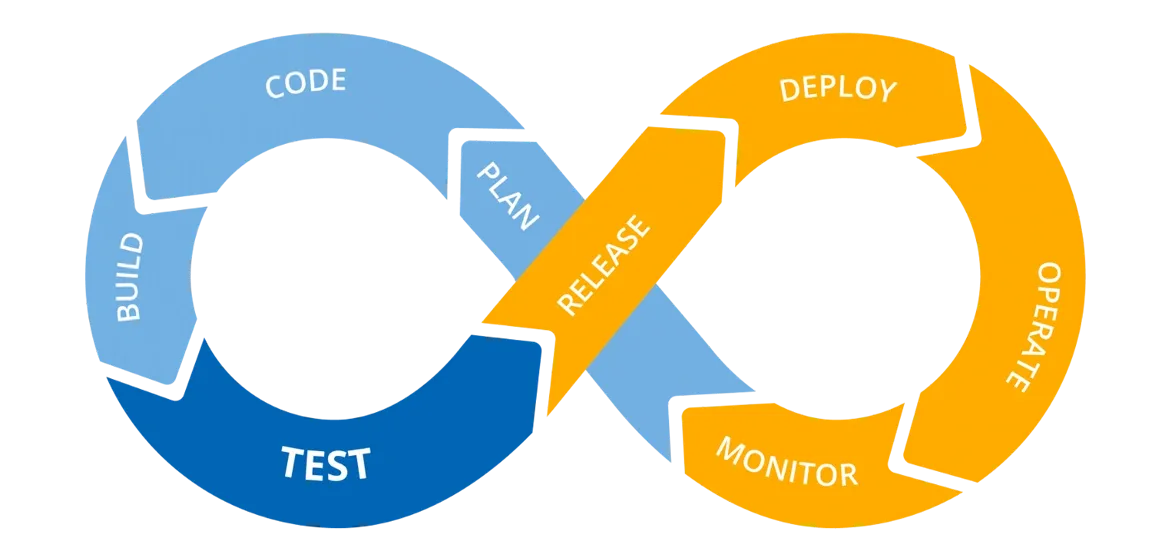 CI/CD
 Selenium
 Selenide
 Playwright
- Selendroid
 Appium
AI/ML
 Python
 TensorFlow
 Keras
 PyTorch
- MatLab
- Google Cloud Platform
.NET
 C#
 Visual Basic
 F#
- Linq
 .NET Core
- Entity Framework
 Hibernate
 ASP .NET MVC Core
 WPF
- MAUI
Mobile
- Objective-C
- Swift
 SwiftUI
- Java
- Kotlin
 Jetpack Compose
 Flutter
 KMM
Business Analysis
- Requirements elicitation
- Requirements traceability
- Change management
- Diagramming
- Stackeholder management
- Prototyping
- Benchmarking
- Data analysis, SQL
System Analysis
- Requirements management
- Decomposition & Alignment
- Impact analysis
- Modeling
- Technical documentation
- Traceability
- System & Integration analysis
DevOps
- Cloud Platforms
- CI/CD
- Container Orchestration
- Infrastructure as Code (IaC)
- Configuration Management
- Monitoring & Observability
- Log Management
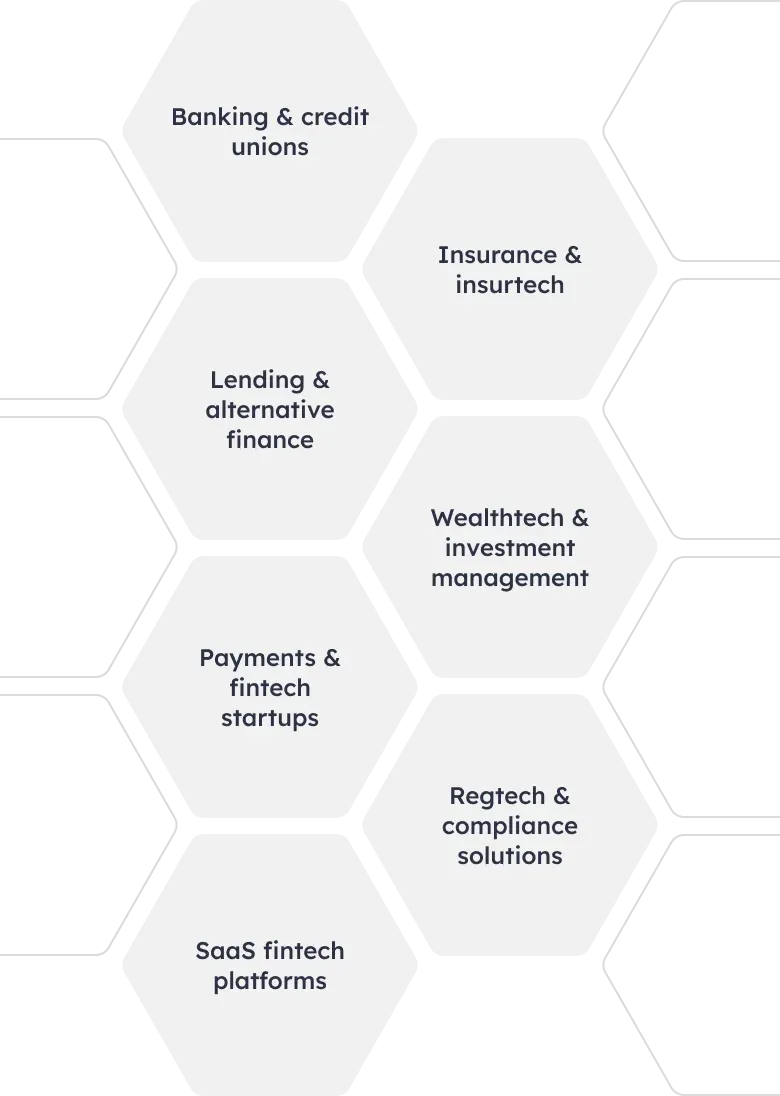
Fintech software solutions for your industry

Our approach to European fintech delivery
Rules first, architecture second, code third. Fintech software development services in Europe fail most often not on engineering quality but on a requirement discovered after launch, when fixing it means touching the core.
Regulatory and licensing discovery
We map which acts apply, in which countries, and whether you need a PI, EMI or CASP licence of your own or a licensed BaaS partner. The output is an applicability map.
Payment, identity and data architecture
We design one payment core for SEPA, Faster Payments and SIC, plus ISO 20022 migration services, the identity layer and EU data residency. Payment software development in Europe can use a shared core with country-specific configuration.
Security, resilience and conformance testing
We run threat modelling, penetration tests, DORA recovery rehearsals and conformance checks against Berlin Group and UK Open Banking specs. Evidence accumulates as we test, so certification and supervisory review run on prepared artefacts.
Phased rollout by country and entity
We open markets one at a time, entity by entity: feature flags, country rule sets, local integrations, canary releases, per-country monitoring. Live markets keep running, and the core remains shared while country-specific requirements are isolated in configurable modules.
AI-augmented delivery for faster fintech releases
We route code generation, tests, documentation and vulnerability scanning through our AI-augmented software delivery model. Engineers keep architecture, review and security approval, so every change carries a human sign-off.
Why choose Modsen as a fintech software development company in Europe?
Reasons that survive a procurement review. A European fintech software development company brings market context; an EU fintech software development company brings the regulatory layer. Both matter when a single product must satisfy several supervisors.
European regulations translated into data models and workflows EU fintech compliance software starts as a requirements map – PSD2/PSD3, DORA, AMLR, CCD2, MiCA, the AI Act, the EAA – and ends as data fields, workflows, integrations and test cases. Your team can point at a requirement and name the function that covers it. |
Payment rails, identity and AML integrations in one team We design one payment core for SEPA, Faster Payments and SIC, plus ISO 20022 migration services, the identity layer and EU-region hosting options. Payment software development in Europe can use a shared core with country-specific configuration. |
Country-by-country rollouts with EU data residency Cross-border payment software in Europe works when country rules are configuration and data transfers are controlled for each market. Feature flags, per-country rule sets, EU-region deployment and market-level observability support faster country rollouts. |
Discovery deliverable: applicability map and licence perimeter Discovery ends with a document: which EU, UK, Swiss and EEA rules apply to this specific product, which licence or partner is required, and how both land in the architecture. Value arrives before development starts, and your lawyers can work from it. |
What our clients say about working with Modsen

“They delivered a scalable solution that reduced our HR workload by 50%.”
Head of IT, Manufacturing Company
Eastern Europe
Clutch · Verified


“We see Modsen as a trustworthy partner providing high-quality banking mobile app services.”
Natalia Osipchik, Founder
UMIND
TopDevelopers · Verified

“They moved at the pace our investors expected, not the pace an outsourced team usually moves at.”
Sophia, CPO
TechBehemoths · Verified
Ask our partners about their experience with Modsen
Leave your email, and we’ll send references confirming our status as software development services company with a reliable track record.
Fintech software development in Europe: FAQ
What makes fintech software development for European businesses different?
What are the SEPA Instant and Verification of Payee deadlines?
How can software support DORA requirements, and does DORA apply to every fintech?
Is AI credit scoring classified as high-risk under the EU AI Act?
Can one fintech platform support the EU, UK, Switzerland and Norway?
Does a software development company need a PI, EMI or CASP licence?
Have PSD3 and the Payment Services Regulation entered into force?

Build your European fintech platform with Modsen